



Bringing AI-Enabled Robotics into the Legacy Factory
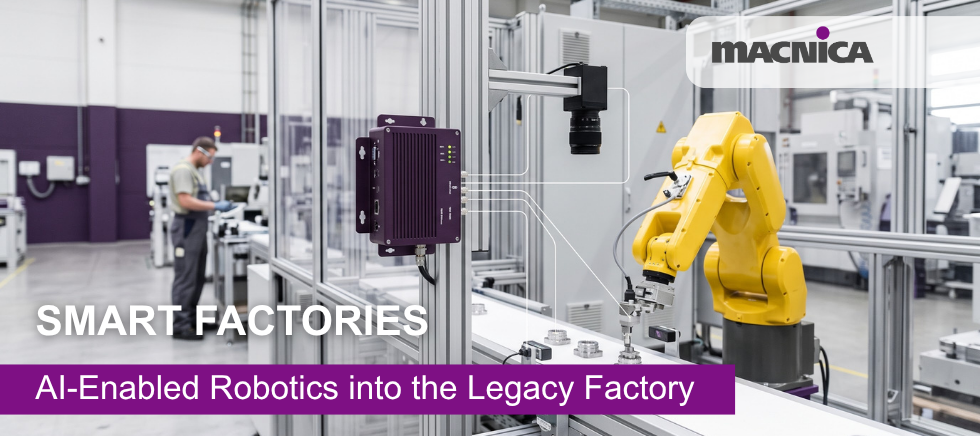
The robotics deployment challenge isn't simply teaching machines to move, it is making physical AI work inside factories that were never designed for it.
For decades, industrial automation scaled by narrowing the problem like fixed workcells, known part positions, repeatable motion, tightly controlled processes and clear separation between people and machines. That model remains essential for existing robots, but AI, simulation, machine vision and edge compute are pushing robots into applications with more variation, more interaction with people and more dependence on existing factory systems.
Industrial robotics is also expanding beyond the fixed robot cell. Articulated arms and Cartesian robots will continue to carry much of the load in welding, assembly, dispensing, packaging, machine tending and material handling, but they are now being joined by robots designed for less structured work.
AMRs are moving material through shared aisles without fixed tracks. Collaborative robots are being placed near operators for loading, inspection, fastening and light assembly. Drones and quadrupeds are extending inspection into warehouses, utilities, large facilities and hard-to-reach areas. Humanoid platforms remain an emerging category, but they represent a longer-term ambition: machines that can operate in spaces originally designed around human reach, movement and tools. This broader robotics mix changes the engineering problem. Each form factor brings different requirements for sensing, edge processing, safety, power, connectivity and integration with the surrounding factory systems.
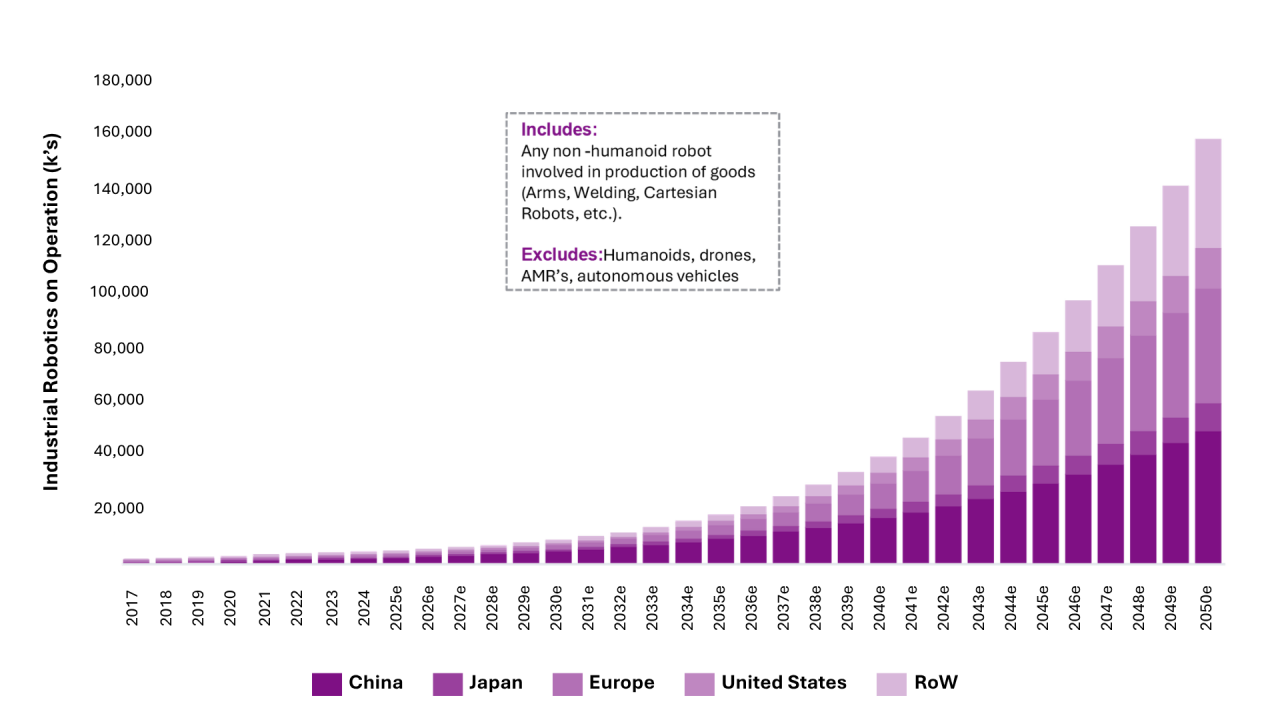
Figure 1. Global industrial robot deployments have more than doubled over the past decade, with 4.66 million industrial robots in operation worldwide in 2024. Emerging robotic categories such as AMRs, mobile manipulators and humanoids are not included in these industrial-robot figures.
Source: International Federation of Robotics (IFR), Morgan Stanley Research estimates
The factory is brownfield, not greenfield
New AI-enabled robots must integrate with decades of capital equipment, floor layouts, safety systems, controls and operator expertise that cannot be discarded on a reasonable timeline or budget. Manufacturers are adding robotics around assets that still create value, avoiding deep PLC rewrites where possible and proving the business case on focused applications before scaling. The physical asset stays, while the sensing, intelligence and connectivity around it become more capable.
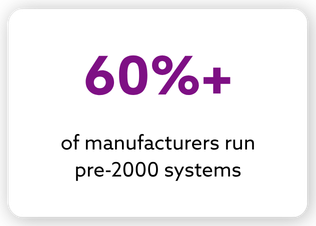
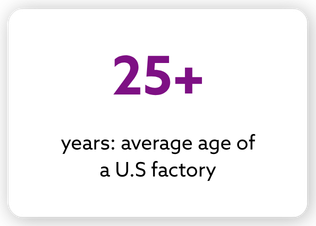
Figure 2. The installed manufacturing base that AI robotics must integrate with, not replace.
Sources: Manufacture Now, 2026 and Advanced Manufacturing, 2025
Practical deployment use-case for brownfield factories
The use-cases gaining traction first are the ones with a clear task boundary, limited disruption and a direct path to production data. They add intelligence to a specific workflow, prove value quickly and create a pattern that can be repeated elsewhere.
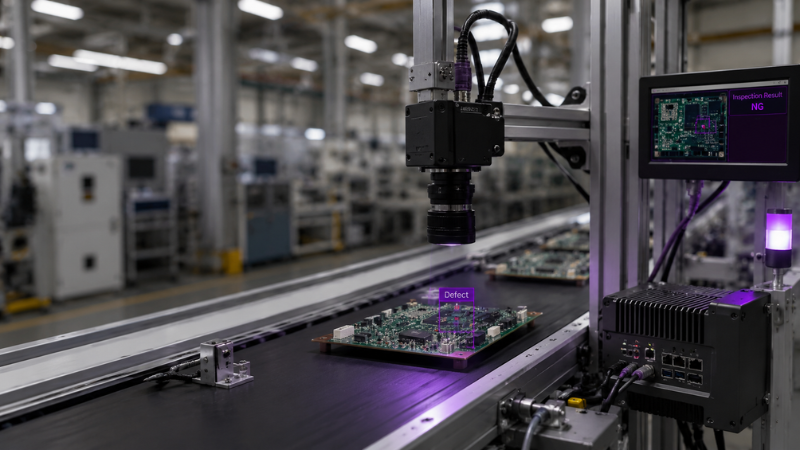
AI visual inspection is a strong first use-case because it can be added beside an existing line or layered onto current camera infrastructure. Instead of relying soley on periodic manual sampling, manufacturers can use AI vision to inspect every individual units at production speed and use edge compute to run defect detection, assembly verification or classification close to the inspection point. Integration with existing cameras, lighting and inspection infrastructure can be as important as the inference model itself. The main design work is not only the AI model. It is image quality, lighting, camera placement, sensor interface, inference performance, confidence thresholds and the handoff to operators, quality systems or controls.
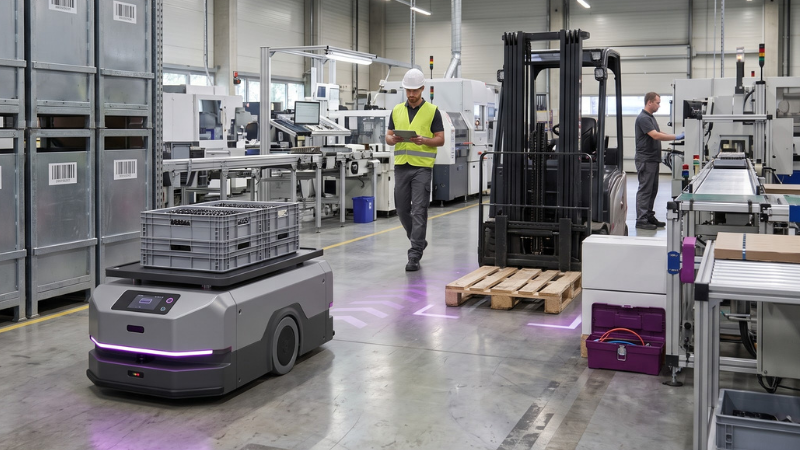
Autonomous material movement is another practical use-case because AMRs can often operate in existing facilities without the fixed tracks or extensive floor infrastructure required by traditional automated transport systems. Many AMRs use mapping, localization and SLAM-based navigation to move through shared spaces, route around obstacles and adapt when layouts change. That makes them well suited to dock-to-line delivery, replenishment, kitting, WIP movement and internal logistics where the facility was not designed around robotic traffic.
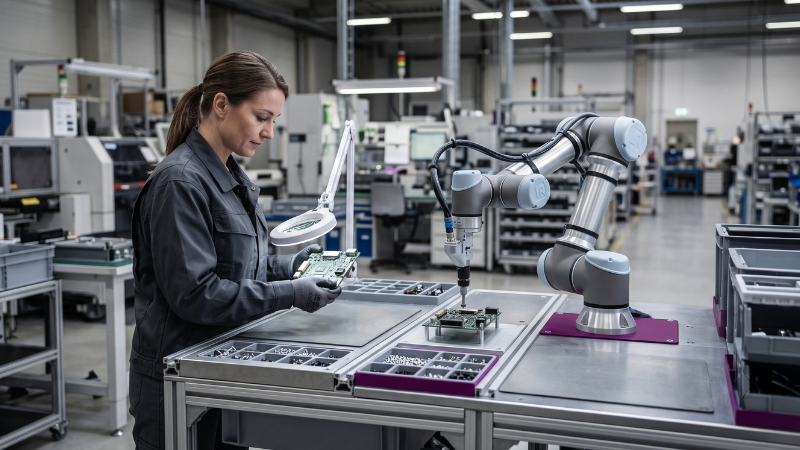
Collaborative workcell automation addresses tasks where a traditional fenced robot cell is too large, rigid or disruptive. Cobots can support machine loading, fastening, dispensing, packaging, inspection and light assembly in spaces that still depend on operator involvement. Their value is flexibility, especially in plants with product mix changes, limited floor space or frequent reconfiguration needs. They still require formal application-level safety assessment; collaborative operation does not mean the robot can simply be placed next to people without additional safeguards.
Together, these use cases show where AI robotics is gaining traction first: applications that add capability without forcing a full infrastructure reset. The common thread is an architecture that can capture useful data, process decisions close to the operation and communicate with the factory systems already in place.
Making old and new systems work together
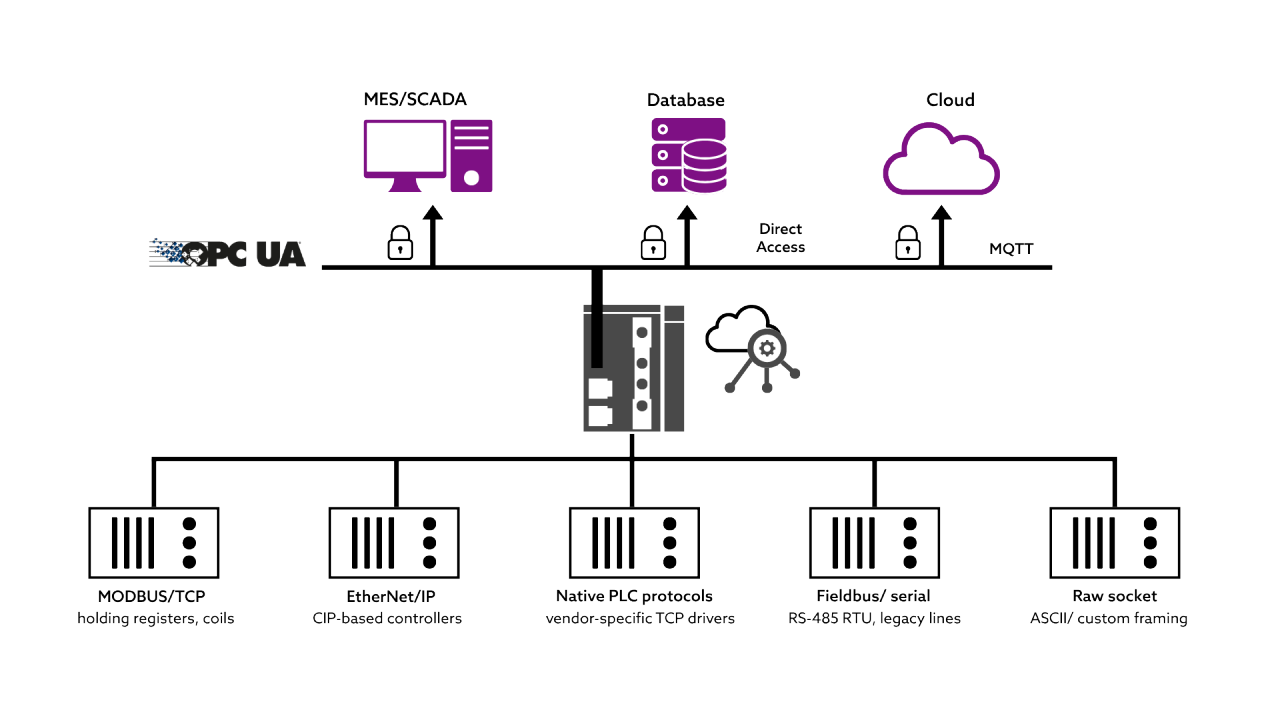
The most consequential challenge in brownfield deployment is not the robot or the AI model. It is the connectivity layer between legacy control systems and modern intelligent equipment. Brownfield factories may contain a mix of Modbus, PROFIBUS, DeviceNet, proprietary serial protocols and vendor-specific industrial networks, alongside newer Ethernet-based systems. New robotic systems expect structured, high-frequency data streams. Bridging that gap is where the real integration effort concentrates.
OPC UA has emerged as a major interoperability standard for connecting industrial equipment, control systems and higher-level applications. Gateway devices and software can translate legacy protocols into OPC UA information models, allowing data from older equipment to be consumed by MES, analytics and other modern applications without necessarily changing the underlying control logic.. OPC UA is supported across a growing range of industrial controllers, robot platforms and edge devices, although the specific implementation, licensing and supported information models vary by vendor and product generation.
For older equipment that predates any network capability, a new generation of non-invasive monitoring tools uses optical sensors, current clamps and computer vision to read machine state without touching the machine’s control system. Even equipment with relay logic or limited connectivity can sometimes be instrumented with external sensors to provide machine-state and OEE-related data without modifying the original control logic. These approaches give system integrators and OEMs a way to bring intelligence to equipment that was never designed for connectivity, which is the reality on most factory floors.
Capture-Process-Communicate. One architecture across every deployment
Despite the differences between inspection stations, mobile robots and collaborative workcells, every brownfield robotic deployment follows the same three-stage pattern. First, the system must capture data from the physical environment: images, depth, force, position, proximity. Second, it must process that data close to the operation, running inference, control loops or planning algorithms at the edge with the latency and power constraints the application demands. Third, it must communicate the result, whether that means triggering a reject on a conveyor, updating a fleet coordinator, sending a quality record to MES or bridging a legacy PLC protocol to a modern analytics platform.
For system designers and OEMs building products that must deploy into the installed manufacturing base as it exists today, selecting components that have been validated together across this signal chain is the most direct path to reducing time-to-deployment and earning a place alongside equipment that has been running for decades.
Ready to design for the brownfield factory?
Macnica Americas helps manufacturers, robotics developers and system designers connect application requirements to leading technologies across sensing, edge intelligence, embedded compute, control and connectivity. Macnica brings technical guidance, supplier alignment, supply chain support and global technology access to help robotics programs move from concept to production with fewer integration risks.
| Capture | Process | Communicate |
|---|---|---|
| Image sensors, 3D Time-of-Flight, force/torque feedback, MIPI CSI-2 and SLVS-EC interfaces | FPGAs, NPUs and AI accelerators, safety-certified MCUs, motor controllers and application processors | OPC UA gateways, industrial Wi-Fi, MES/SCADA integration, legacy protocol bridging |
 |  |  |
Contact Us
Ready to evaluate your robotics architecture? Contact Macnica Americas to identify the right supplier technologies and define a practical path from concept to deployment.
Macnica Americas Site Map


©Copyright 2026 Macnica Americas, Inc.