
STREAL for Robotics and AMRs
STREAL Strain Gauge Sensors - Force & Torque Sensors in Robotics

Give your Robots and AMRs True Force Awareness With STREAL Strain Gauge Sensors
Embedded force and torque sensors in robotics and strain sensing for safer collaboration, higher precision, and fewer unplanned stops
Robots, grippers, and AMRs experience critical forces inside their mechanisms, including inside fingers, links, joints, fixtures, and frames. Traditional sensors such as wrist-mounted force-torque sensors, load cells, and motor current detection only measure forces at the periphery, far from where slip, overload, chatter, fatigue, or micro deflection occur.
This leads to:
- Missed local events such as slip, minor collisions, bending and overload
- Unwanted stops and unstable grip thresholds
- Reduced pick accuracy and poor insertion repeatability
- Undetected structural fatigue and alignment drift
Engineering teams need local, high-resolution sensing inside the mechanism, not only at the wrist or in a separate transducer.
STREAL Force and Torque Sensors for Robotics and AMRs
STREAL is a semiconductor-grade microstrain sensing platform that installs inside joints, grippers, toolholders, spindle housings, and AMR frames. Each module measures strain along a primary axis, with resolution down to 0.1 µε, and converts it to digital force, load, or torque signatures for your controls or quality teams.
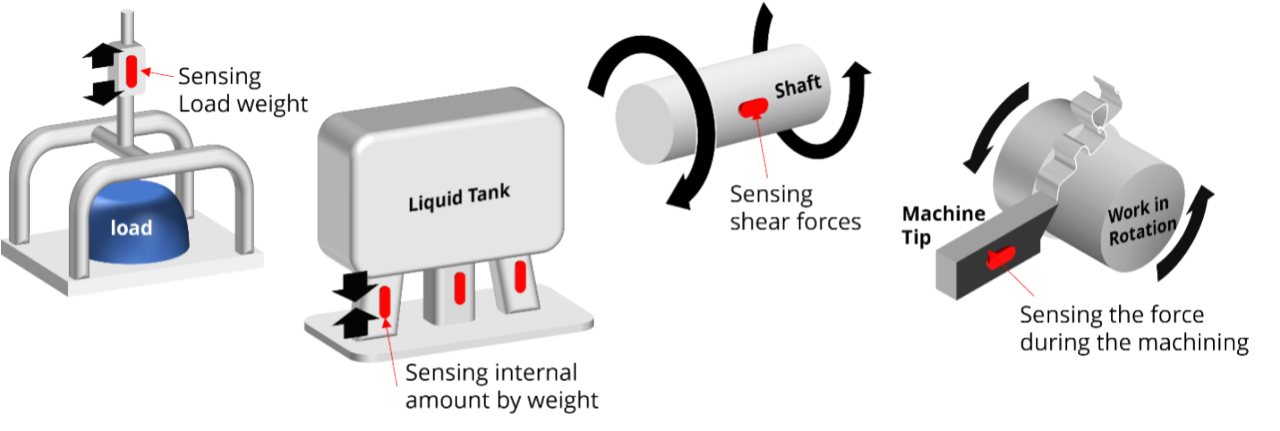
Instead of relying on one peripheral sensor, STREAL enables local and distributed sensing with multiple compact nodes placed directly on structural members. You get local signals that improve precision and uptime without major redesign. This complements existing tools you already use.
If your application needs certified absolute load or a 6-axis force vector at the wrist, keep those tools in place and add STREAL strain gauge sensors where space and localization matter.
The result:
- Higher precision for gripping, insertion, and approach motions
- Higher uptime through early detection of overloads, binding, or fatigue
- Better contact awareness without major mechanical redesign
Why Robotics Teams Choose STREAL
- Ultra-compact sensor modules (2.5–3.2 mm² silicon die) with integrated ADC, amplification, temperature compensation, and diagnostics
- Proven placements on industrial robots, cobots, grippers, AMRs, and rotating assemblies
- Macnica sensor-to-solution support for placement design, calibration workflow, firmware, dashboards, and pilot-to-production scaling
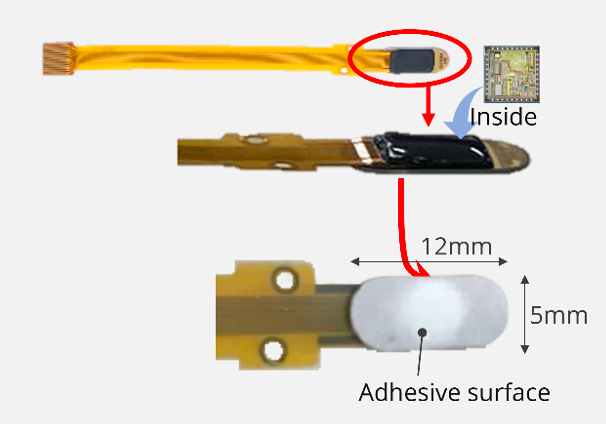
STREAL Products: SR300 and SR500
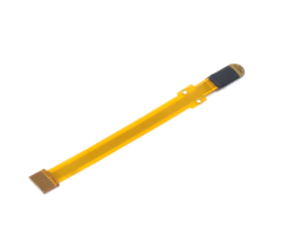
SR300
Optimized for low-power IoT
Best for: battery nodes, wireless retrofit, AMRs
- Resolution: 1 µε
- Signal bandwidth: 1.3 kHz
- Typical power: ≤ 3 mW
- Die size: 2.5 mm × 2.5 mm
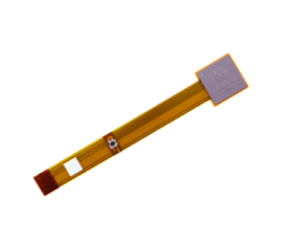
SR500
Optimized for high-precision industrial use
Best for: industrial robots, spindles
- Resolution: 0.1 µε measured at 1.3 kHz
- Signal bandwidth: up to 20 kHz
- Typical power: about 70 mW
- Die size: 3.2 mm × 3.2 mm
- Integrated functions: on-chip ADC and amplifier, temperature compensation, and self-diagnostics
Where STREAL Goes on Robots and AMRs
End Effectors and Grippers
What they do
Mount STREAL strain gauge sensors directly to the finger body, jaw, or toolholder to measure:
- Microstrain from gripping forces
- Slip events and mis-grips
- Overload and shock events during pick-and-place
- Deformation signatures correlated to part geometry or hardness
Outcomes
- Tighter grip windows based on real strain thresholds (not inferred current limits)
- Real-time slip detection without bulky tactile arrays
- Higher pick reliability in small-part or high-mix environments
- Reduced nuisance stops for collaborative robots
What you install
- One STREAL module bonded to the gripper link or finger
- Quick mechanical prep, single-axis calibration routine
- Connect force signatures to your PLC or dashboard
- Macnica assists with threshold derivation and data QA
Joints and Links
What they do
Place STREAL on link plates, gearbox housings, or joint structures to capture:
- Contact and collision forces invisible to wrist F/T sensors
- Backdrive or binding forces in reducers and bearings
- Bending/torsional strain that impacts positional accuracy
- Early fatigue indicators in robot arms
Outcomes
- Improved repeatability through monitoring of link deflection
- Safer human-robot interaction with local collision detection
- Early detection of abnormal loads before failures or downtime
- Higher stiffness validation for precision applications
What you install
- 2-4 sensors distributed across load paths for vector reconstruction
- Short calibration routine
- Threshold logic configured by the customer
- Macnica provides placement simulation guidance and data handling help
Spindle Housings and Fixtures (Machine Tools / EOAT Machining)
What they do
Embed STREAL at the spindle housing, toolholder, or fixture face to monitor:
- Cutting-force signatures
- Tool wear progression
- Chatter onset
- Fixture deflection due to clamping/load variation
Outcomes
- Reduced scrap through earlier detection of cutting anomalies
- Optimized tool life and predictable tool-change intervals
- Immediate root-cause visibility when quality trends drift
- Mechanical load contextualization that vibration sensors often miss
What you install
- One module bonded to the spindle or fixture housing
- Calibration against known tool or load conditions
- Continuous signature monitoring with thresholds and trend windows
AMR Frames and Mounts
What they do
Bond STREAL to steel members and frame nodes of AMRs to detect:
- Overload conditions from shifting payloads
- Fixture loosening, stress risers, and early crack propagation
- Impact events and route-dependent force patterns
- Long-term fatigue under mixed-duty cycles
Outcomes
- Higher fleet uptime through early fault detection
- Improved ride stability under dynamic loads
- Event-to-route correlation for operations analysis
- Predictive frame-health monitoring without retrofitting bulky sensors
What you install
- 2-3 modules on frame or mount locations
- Simple software thresholds and fatigue trending
- Macnica assists with review of data signatures and alert integration
How to Start Fast with an Evaluation Kit
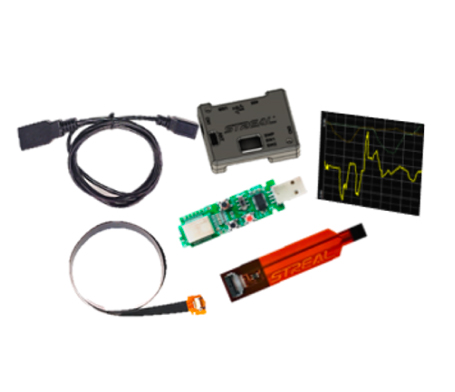
What’s included:
- Evaluation unit with reference firmware, sample scripts, and onboard configuration tools
- Quick-start guidance for bonding, orientation, calibration, and data streaming
- Example dashboards and event traces for threshold setting
- Customer controls all alert thresholds; schematics not provided
Your 2-4 week pilot:
- Select 2-4 sensing points on a robot or AMR where force signatures matter
- Install and run a simple calibration cycle (5-10 minutes)
- Collect and review real events under live duty cycles
- Set thresholds, validate actions, and tune alert workflow
Macnica reviews your data and recommends next steps for scaling.
Frequently Asked Questions
Do I need to replace my wrist force-torque sensor or load cells?
No. If you need a certified load or full 6-axis vector, keep them. STREAL adds local, embedded sensing where space and localization matter.
Who sets the alert thresholds?
You do. Macnica supports with data interpretation and process integration.
Which materials work best?
Bond to monolithic metal structures (steel links, frames, fixtures). Avoid highly compliant or laminated surfaces.
How small is the hardware?
Each STREAL module uses a tiny semiconductor strain sensing system with integrated ADC, amplifier, and temperature sensor. Typical flex modules are under 66 mm.
Next Steps
Request an evaluation kit today for STREAL strain gauge, force, and torque sensors, or contact us for a quote or more technical information
Talk with Macnica Americas about placement design, calibration workflow, and data integration.