
Autonomous Mobile Robots
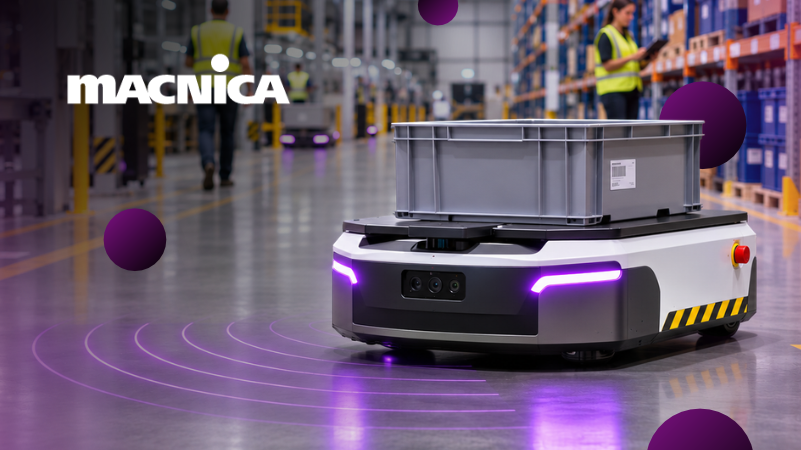
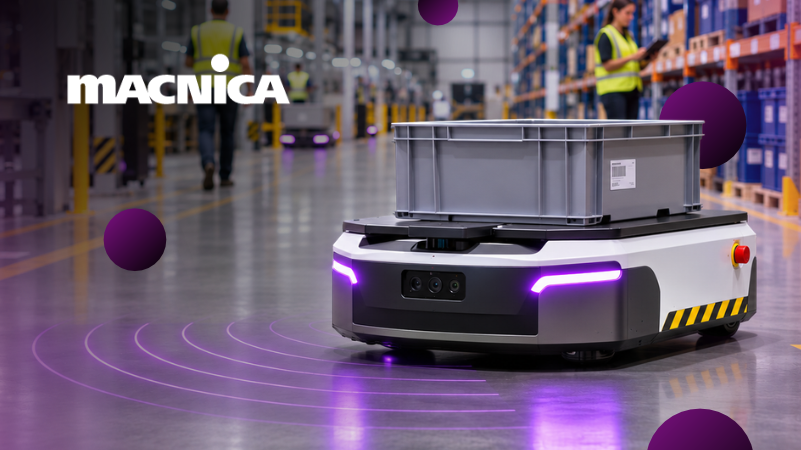
Build Smarter, Safer AMRs from the Sensing Layer Up
AMRs must navigate busy, changing spaces on their own, around people, for a full shift on one charge. Every AMR comes down to six subsystems: sensors that perceive, compute that navigates, a safety layer that can always stop the robot, motor control that moves it, power management that keeps it running, and a fleet link that coordinates it. Macnica brings together the leading suppliers across all six subsystems, with reference designs and engineering support to get your robot moving faster.
Key Requirements for AMR Design


Fast Reaction Time
50–100 ms from obstacle detection to motor response, so the robot stops before contact.


Reliable Perception
Sensors that work in glare, darkness, dust and fog, with no blind spots around the robot.


Accurate Localization
SLAM, IMU and wheel odometry that keep the robot on course as layouts change.


Efficient Edge AI
Onboard detection and classification within a few watts, in fanless enclosures.


Full-Shift Runtime
8–12 hours of continuous operation from one managed battery.


Functional Safety
SIL 2+ with an independent safety path, designed to ANSI/RIA R15.08 and ISO 3691-4.


Fleet Connectivity and Security
Seamless roaming, secure communication and OTA updates across dozens to hundreds of robots.


Compact, Rugged Design
Electronics that fit a small chassis and withstand vibration, temperature swings and dust.
Types of AMRs
Goods-to-Person Robots
Bring shelves and totes to pickers in fulfillment centers.
Collaborative Picking Robots
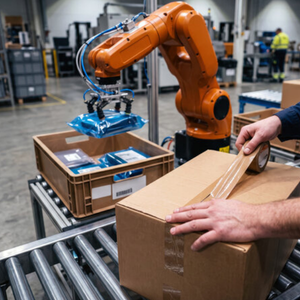
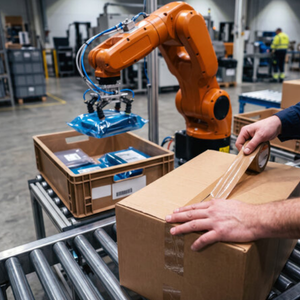
Work beside people, which demands reliable person detection.
Tuggers and Cart Movers
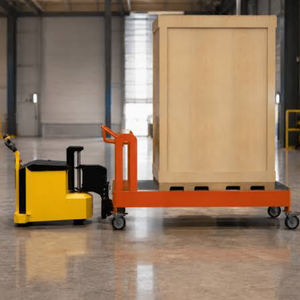
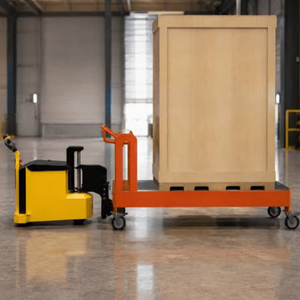
Tow carts between storage and the production line.
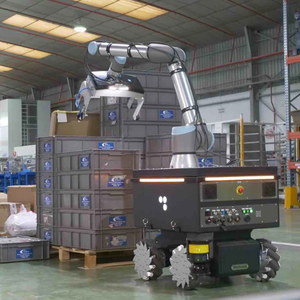
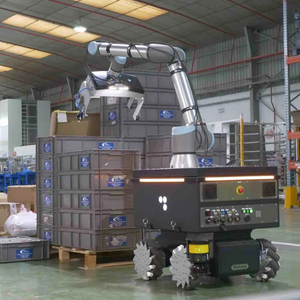
Mobile Manipulators
An AMR base with a robot arm that moves to the work.
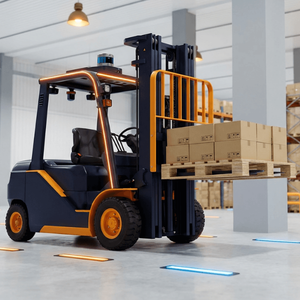
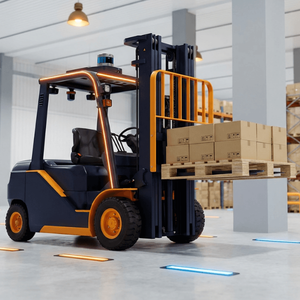
Pallet Movers and Autonomous Forklifts
Carry heavy loads where safety and precise positioning matter most.
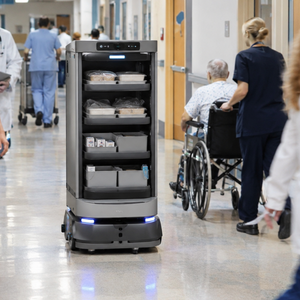
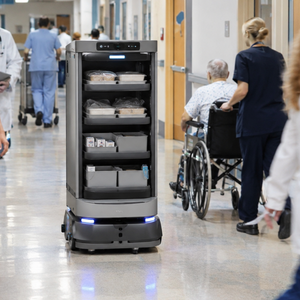
Hospital and Service Delivery Robots
Move supplies, meals and specimens through crowded indoor spaces.
AMR Block Diagram
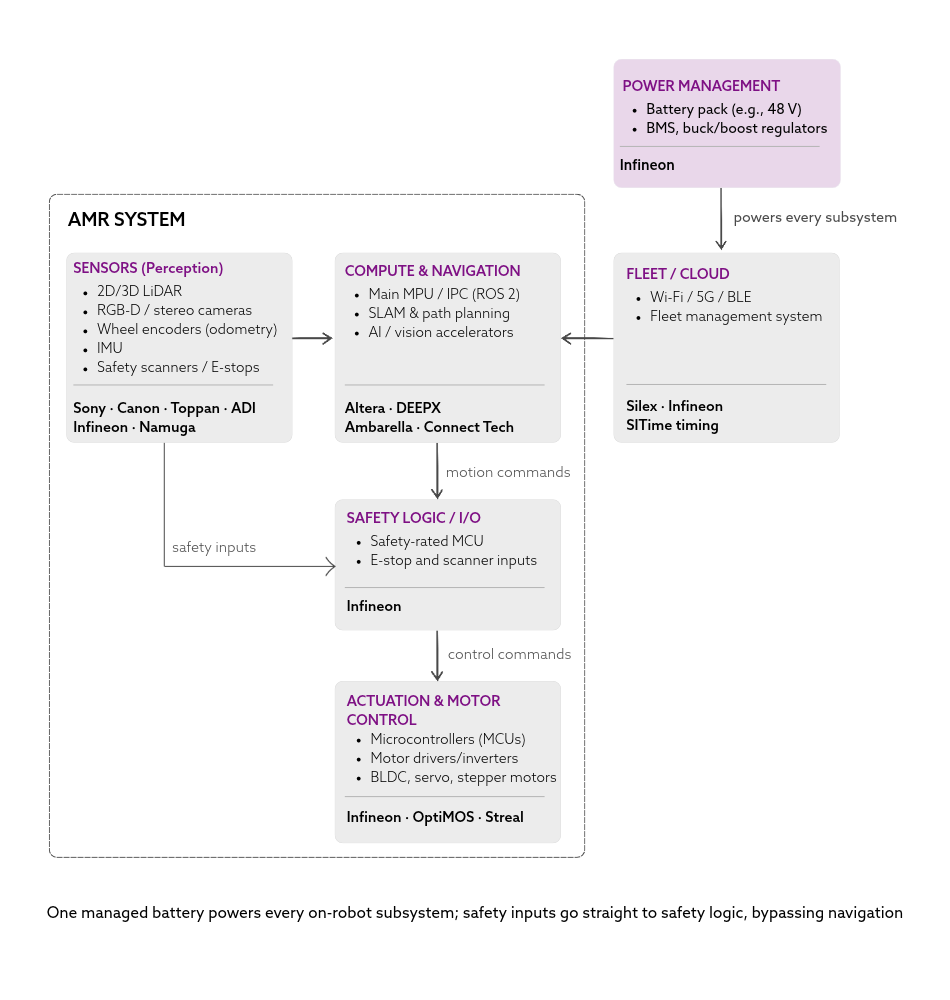
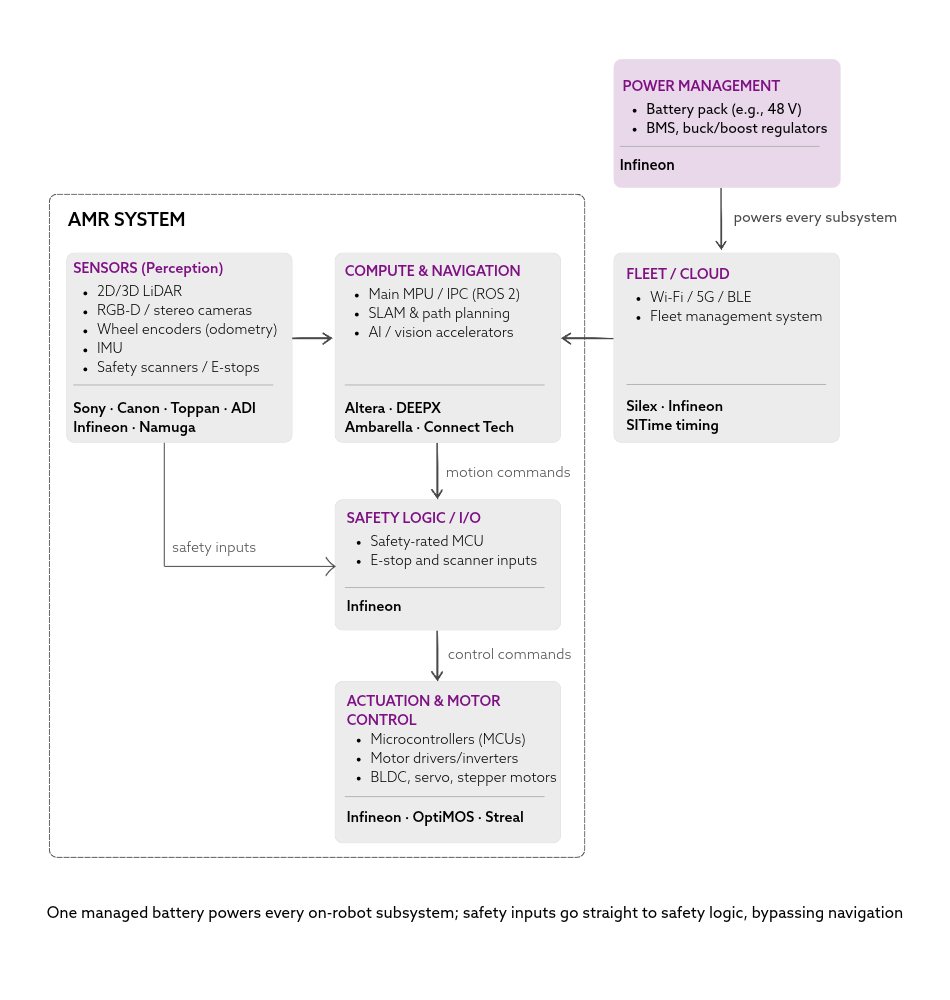
This block diagram shows how the core subsystems of an AMR connect, from sensing and compute to safety, motor control and power, and which Macnica partner products power each one.
AMR Subsystems
- Sensors
- Compute & Navigation
- Safety Logic & I/O
- Motor Control
- Power Management
- Fleet & Cloud
See the world in any light
Sensors give the robot a reliable picture of its surroundings for mapping, localization and obstacle detection, in glare, darkness and dust.
What's inside
- 2D/3D LiDAR
- RGB-D and stereo cameras
- 3D ToF camera modules
- Wheel encoders for odometry
- IMU
- Safety scanners and E-stops
Featured products
- Toppan Hybrid ToF Modules: up to 120 fps depth, accurate in light up to 100,000 lux
- NAMUGA ToF and Stereo Camera Modules: compact 3d depth sensing for obstacle avoidance, mapping and person detection
- Sony IMX560 SPAD Depth Sensor: SPAD image sensor for LiDAR receiver and time-of-flight ranging applications
- Sony STARVIS 2 and Pregius S: low-light and global-shutter vision
- ADI LiDAR and Radar Development Kits: prototype LiDAR and radar front ends
- Infineon TLE5012 Angle Sensor: precise wheel position for odometry
Related resources: Imaging and vision solutions
The Robot's brain
Runs ROS 2, builds the map with SLAM, plans paths and accelerates AI perception, all within a tight power budget.
What's inside
- Main MPU or industrial PC running ROS 2
- Edge AI carrier boards with multi-camera ingest
- SLAM and path planning
- AI and vision accelerators
Featured products
- Altera Agilex 5 SoC FPGA: sensor fusion, ISP and AI in one device, with ROS 2 on the hard processor
- DEEPX DX-M1 NPU: 25 TOPS at a typical 5 W in an M.2 module
- DEEPX DX-H1 PCIe Card: high-throughput AI for multi-camera robots
- Ambarella CV72S Vision SoC: multi-camera edge AI under 5 W
- Connect Tech NVIDIA® Jetson™ Carrier Boards: rugged edge AI platforms for multi-camera perception
Always able to stop
Takes inputs straight from safety scanners and E-stops and can stop the robot on its own, independent of navigation and AI. Motion commands pass through it before reaching the motors.
What's inside
- Safety-rated MCU
- Watchdog and kill-switch logic
- E-stop and scanner inputs
- CAN and industrial Ethernet I/O
Featured products
- Infineon AURIX TC3xx MCU: safety MCU for watchdog and kill-switch logic
- Infineon TLE9351 CAN Transceiver: robust networking between subsystems
- Altera Agilex 5 SoC FPGA: FPGA-implemented safety logic and motor control supervision
Smooth, efficient motion
Turns control commands into precise wheel and joint motion, using current sensing, position feedback and joint force sensing.
What's inside
- Motor control MCUs
- Motor drivers and inverters
- BLDC, servo and stepper motors
- Joint torque and end-effector force sensors
Featured products
- Infineon IMD701A Motor Controller: programmable three-phase wheel drive
- Infineon XMC and PSoC Control C3 MCUs: real-time motor control
- Infineon 6EDL7141 Gate Driver: three-phase smart gate driver for BLDC motors
- Infineon OptiMOS MOSFETs: efficient power stages
- STREAL SR300 and SR500 Strain Sensors: joint torque, gripper force and chassis load sensing for mobile robots and manipulators
Power for a full shift
Supplies every on-robot subsystem: monitoring each cell, protecting the pack and converting battery voltage where it's needed.
What's inside
- Battery pack (typically 24 V or 48 V)
- Battery management system
- Buck and boost regulators
- Current sensing
Featured products
- Infineon TLE9012 and TLE9018 BMS ICs: cell monitoring for 12–18 cell packs
- Infineon TLI4971 Current Sensor: accurate pack current measurement
- Infineon OptiMOS MOSFETs: efficient power conversion and switching
Connected to the fleet
Links each robot to the fleet management system that assigns missions, shares maps and tracks every robot on the floor.
What's inside
- Wi-Fi with seamless roaming
- 5G/LTE for large or outdoor sites
- Bluetooth LE for service access
- Fleet management system
Featured products
- Silex SX-SDMAX Wi-Fi Module: industrial Wi-Fi with reliable roaming
- Infineon AIROC Bluetooth LE: secure service and setup access
- SiTime Oscillators and Clocks: precise timing for sensor synchronization
Why Choose Macnica for Your AMR Design?
One Integrated Stack
Sensing, compute, motor control, safety and wireless from leading suppliers, selected to work together.
Reference Designs
Start from proven partner reference designs and demonstrators instead of a blank page.
Engineering Support from Concept to Production
FAEs who help with architecture, part selection, integration and long-term supply.
Technical Resources
- Solution brief: Sensing, Compute and Connectivity for Robotics and Physical AI
- Development kit: Agilex 5 E-Series 065B Development Kit
- LiDAR and Radar Development Kits
- Application guide: STREAL for Robotics and AMRs
Frequently Asked Questions
An AGV follows fixed paths. An AMR maps its surroundings and plans its own route around obstacles.
Most combine LiDAR, cameras, radar, 3D ToF and an IMU for reliable navigation.
LiDAR builds precise maps, while radar keeps detecting obstacles through dust, fog and low light. Together they cover each other's blind spots.
It uses SLAM (simultaneous localization and mapping), combining LiDAR or camera data with IMU and wheel odometry to track its position in real time.
It depends on the number of cameras and models, but power matters as much as performance. Efficient NPUs like the DEEPX DX-M1 deliver 25 TOPS at 5 W, enough for real-time perception without a fan.
Safety functions must respond the same way every time. Running them on a dedicated safety MCU means a stop command never waits on AI processing.
Most AMRs target 8–12 hours of continuous operation. Efficient compute, motor drivers and battery management all help reach a full shift.
Collaborative AMRs typically target SIL 2 or higher. North American programs commonly design to ANSI/RIA R15.08 and ISO 3691-4.
Wi-Fi suits most indoor facilities. 5G adds coverage and capacity for large sites or where Wi-Fi roaming is unreliable. Many fleets use both.
It assigns missions, manages traffic and charging, shares maps and monitors every robot's status, so many AMRs can work in the same space without conflict.
Yes. ROS 2 typically runs on the main processor in the compute and navigation subsystem, and Agilex 5 SoC FPGAs can run ROS 2 alongside real-time motor control on one chip.
Yes. Development kits are available for Agilex 5 FPGAs, LiDAR and radar front ends, and more. Contact us to request one.
Yes. Macnica represents leading suppliers across all major AMR subsystems and can help your team identify and source the right components, with engineering support to integrate them.
Ready to Build Your AMR?
Share your requirements and our robotics engineers will recommend a starting architecture, reference design and kit.
