
Smart Factory Sensing, Edge AI and Connectivity | Macnica
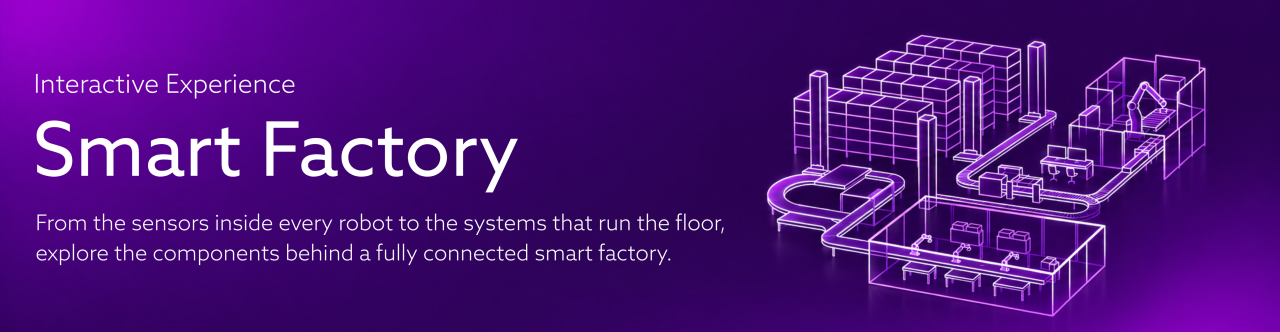

Intelligent Sensing, Edge AI and Industrial Connectivity Across the Factory Floor
Smart factories are transforming manufacturing through intelligent automation, robotics, AI-powered inspection and connected production systems. From precision assembly to autonomous material handling, every operation depends on accurate sensing, fast decision-making and reliable communication.
Building these systems requires more than component selection - it requires understanding how sensing, processing and communication work together as a coherent architecture.Sensors, processors, controllers and networks must work together to improve productivity, maintain quality and enable flexible manufacturing.
Macnica brings these technologies together through its Capture, Process and Communicate framework, helping engineers develop intelligent, connected factory systems.
Explore the Technologies Enabling Smart Factory Use Cases
Discover the Technologies Behind Intelligent Manufacturing
Take an interactive journey through five key factory applications: Assembly, Vision Inspection, Packing, Robot Palletizing and AGV/AMR. Discover how sensing, edge AI, embedded processing and industrial connectivity work together to enable intelligent automation.
How to Explore: Click any station to explore its application and the Capture, Process and Communicate technologies behind it. Use the Back button to return to the factory overview and explore other stations.
- Automated Assembly
- Automated Vision Inspection
- Intelligent Packing
- Robotic Palletizing
- Autonomous Material Handling


Precision and Consistency at Every Step
Robotic assembly systems use machine vision, depth sensing and edge AI to identify components, guide placement and verify assembly accuracy. Applications include precision positioning, assembly verification, defect detection and equipment condition monitoring.
Key Technologies:
- Capture: Time-of-Flight (ToF) depth cameras, high-resolution CMOS image sensors, global-shutter cameras and embedded strain sensors.
- Process: Edge AI processors, FPGAs, vision SoCs, high-speed imaging interfaces and industrial computers.
- Communicate: Industrial wireless modules, microcontrollers, mesh networking and operator displays.

Intelligent Quality Control at Production Speed
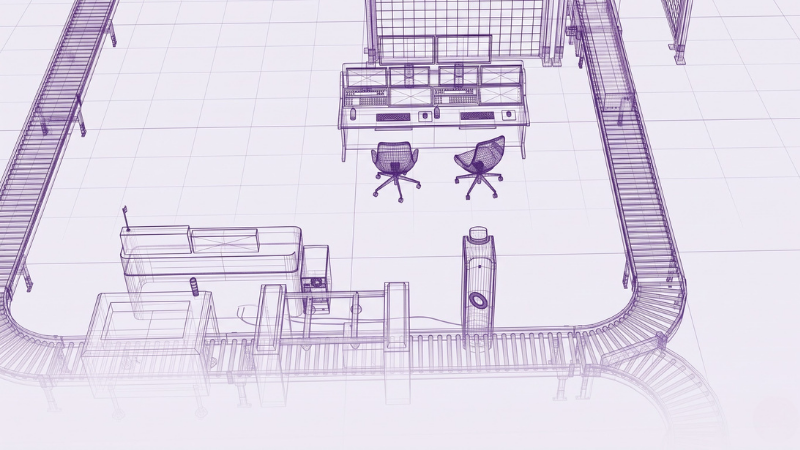
Automated inspection systems combine high-resolution imaging and edge AI to identify defects, verify dimensions and maintain product quality without slowing production. Applications include surface defect detection, dimensional inspection, label verification, automated quality decisions and traceability.
Key Technologies:
- Capture: Ultra-high-resolution CMOS sensors, global-shutter and low-light image sensors, ToF depth sensing and strain sensors.
- Process: AI inference processors, FPGAs, vision SoCs, CoaXPress/SLVS-EC interfaces and industrial computing platforms.
- Communicate: Industrial wireless connectivity, embedded controllers and operator displays.
Accurate Product Handling and Packaging Automation
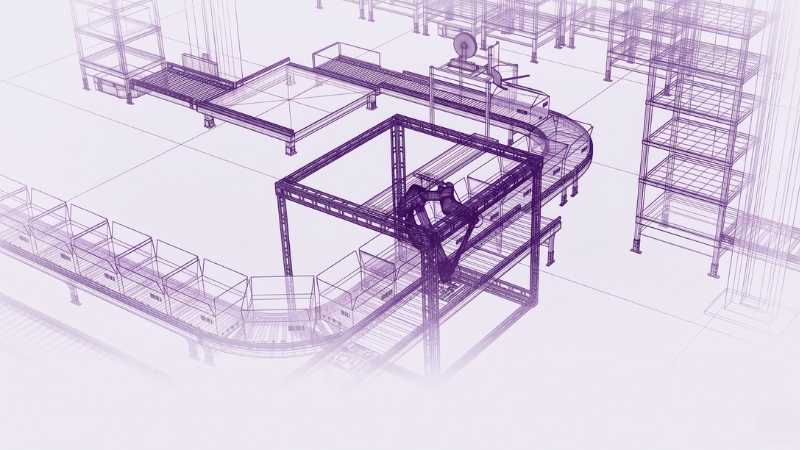
Vision-guided robotic systems identify products, determine placement positions and verify packaging operations while maintaining continuous material flow. Applications include product identification, robotic pick-and-place, packaging verification, load monitoring and order traceability.
Key Technologies:
- Capture: ToF depth cameras, high-resolution CMOS sensors, global-shutter imaging and embedded strain sensors.
- Process: Edge AI processors, FPGAs, high-speed imaging interfaces, industrial computers and industrial SSD storage.
- Communicate: Wi-Fi 6/7 modules, microcontrollers, industrial displays and mesh networking.
Intelligent Material Handling with Vision and Force Feedback
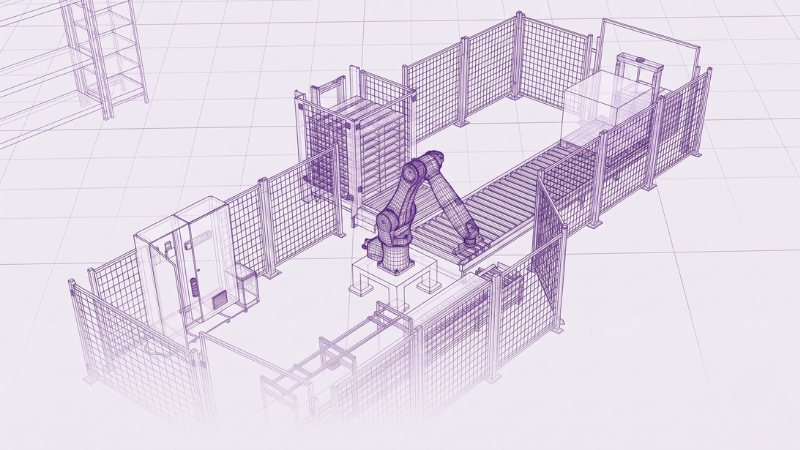
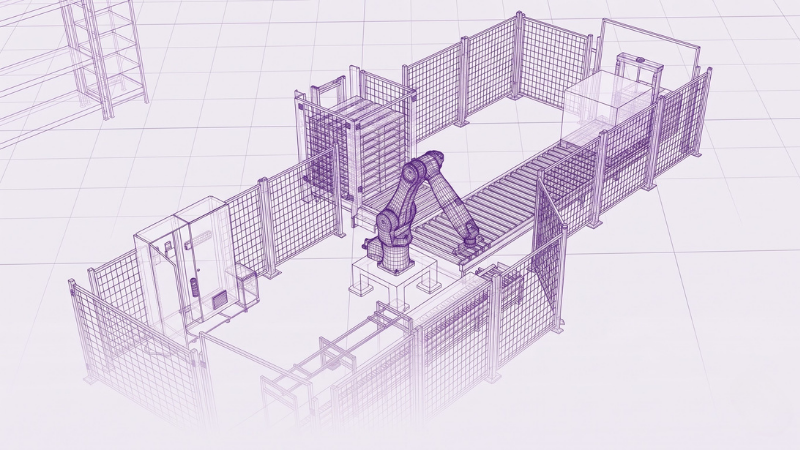
Robotic palletizing combines machine vision, depth sensing and force feedback to identify packages, monitor gripping loads and guide accurate placement on pallets. Applications include box localization, grip-force monitoring, accurate stacking, overload detection and coordinated pallet movement.
Key Technologies:
- Capture: ToF cameras, high-resolution and global-shutter image sensors, embedded strain sensors and radar-based presence sensing.
- Process: AI vision SoCs, edge AI processors, FPGAs, high-speed camera interfaces and industrial robotic computing platforms.
- Communicate: Industrial wireless modules, motor-control microcontrollers, gate drivers and operator displays.


Intelligent Navigation and Connected Material Movement
Automated guided vehicles and autonomous mobile robots combine environmental sensing, onboard AI processing and industrial connectivity to support navigation, obstacle detection and material transport between factory stations. Applications include obstacle detection, localization, route planning, load monitoring, fleet connectivity and autonomous material transport.
Key Technologies:
- Capture: ToF depth cameras, global-shutter image sensors, radar, embedded strain sensors and vision modules.
- Process: Edge AI processors, embedded GPU computing platforms and FPGAs.
- Communicate: Wi-Fi 6/7 connectivity, motor-control microcontrollers, power-management ICs and industrial displays.
How Macnica Helps
From Individual Components to Integrated Smart Factory Solutions
Developing intelligent factory systems requires careful coordination between sensing, processing, control and connectivity. Each technology must meet application-specific requirements for accuracy, response time, power efficiency and reliability.
Macnica supports engineering teams with a broad technology portfolio and system-level expertise across the capture, process, and communicate layers.