
Choosing the Right Lens for Your Image Sensor
A great image sensor paired with the wrong lens is a wasted image sensor. Here is a practical guide to choosing lenses for machine vision and embedded vision cameras.
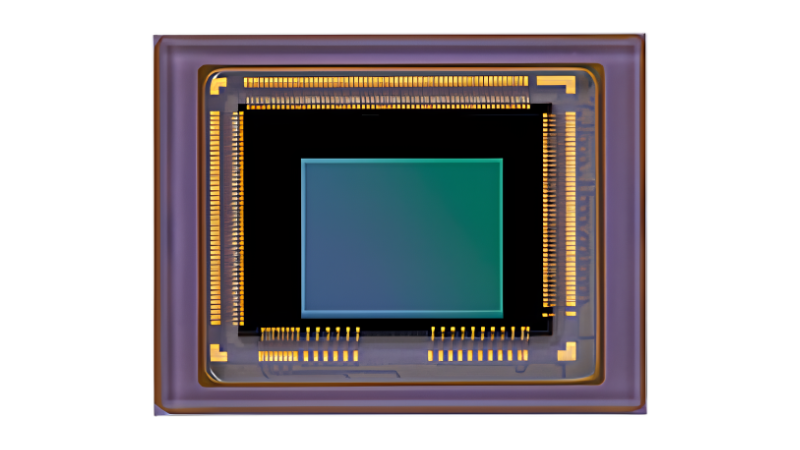
When customers come to Macnica Americas for Sony and Canon image sensors, the next question is almost always the same: which lens should we use? It is a fair question. The lens decides how much of the sensor's resolution actually reaches the image, how much of the scene you see, and whether the camera survives its environment.
In Macnica's Capture → Process → Communicate framework, the lens is the very first step of Capture. Get it right, and everything downstream works with better data. Get it wrong, and no amount of processing will recover the lost detail.
Start with the sensor, then pick the lens
The sensor's optical format sets the first rule: the lens must project an image circle at least as large as the sensor's diagonal. A lens with too small an image circle leaves dark, blurry corners (vignetting). A much larger one works, but adds size and cost you don't need. The format also points you toward a lens mount, and the mount shapes almost every other trade-off:
Machine vision
C/CS-mount, up to Type 1.1"
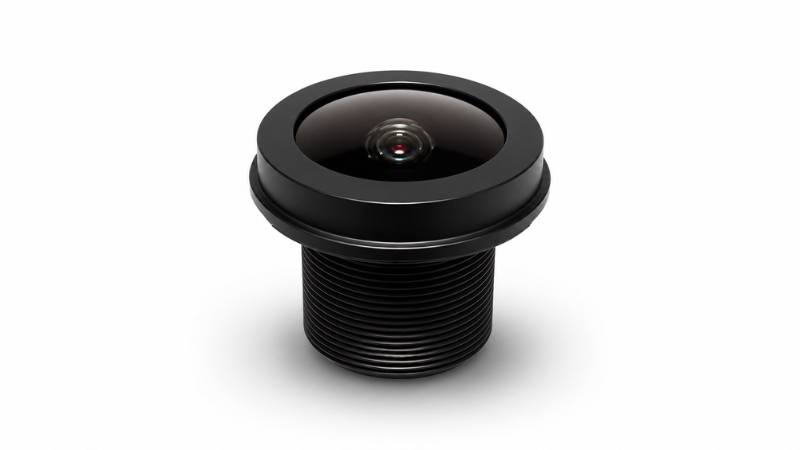
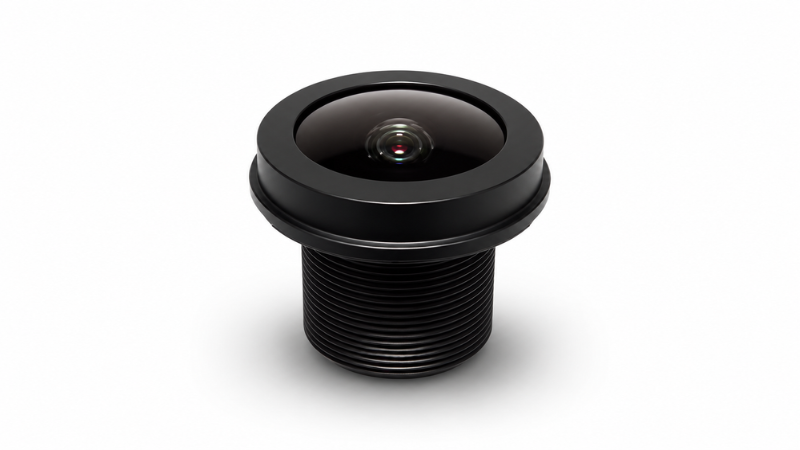
Embedded vision
S-mount (M12), up to Type 1/2"
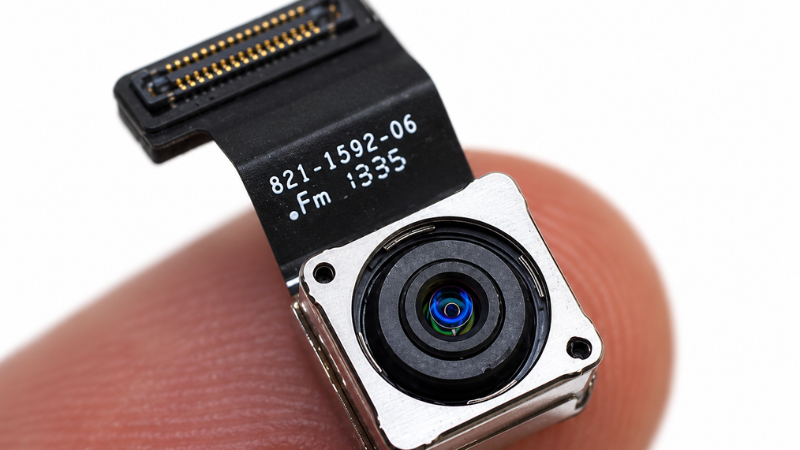
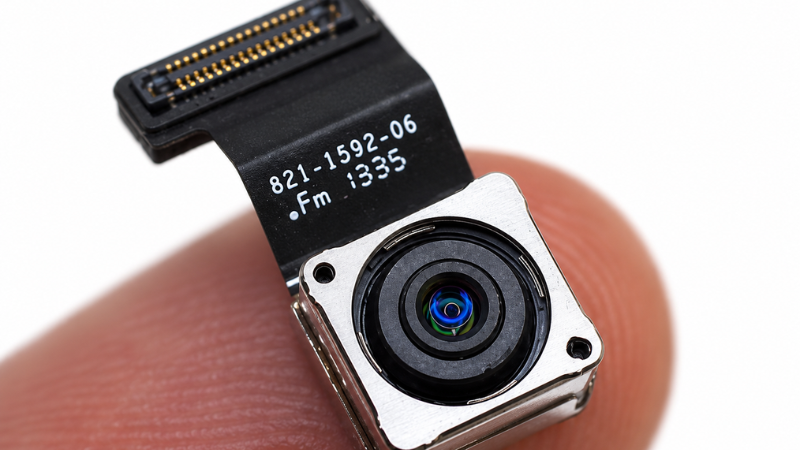
Consumer camera
Smaller than M12, liquid lenses
Camera segment | Typical sensor format | Typical lens mount | Priority |
|---|---|---|---|
| Consumer camera | Very small | Smaller than M12, liquid lenses | Lowest cost, smallest size |
| Embedded vision | Up to Type 1/2" | S-mount (M12) | Cost and size, at high volume |
| Machine vision | Up to Type 1.1" | C-mount / CS-mount | Reliability, quality, performance |
The two mounts you will meet most
S-mount: small, light, and cost-effective
S-mount "board lenses" screw directly into a holder on the camera board. The most common is M12x0.5 (12 mm diameter, 0.5 mm thread pitch), sometimes called an "automotive lens." It covers sensors up to Type 1/2", or an image circle under 11.9 mm. Smaller versions (M10, M8, M6) suit miniature cameras; larger ones (M20, M22) suit bigger sensors. S-mount lenses are usually fixed focus, made of glass, plastic, or a hybrid, and generally low cost. The trade-off is higher distortion at wide angles. They are focused once to a set working distance and then fixed in place.
One practical tip: S-mount has no standard flange focal distance. Buy the lens and holder from the same supplier, so the threads match and both parts expand the same way with temperature. Otherwise the lens can wobble or drift out of focus.
Typical uses: smart home cameras, video doorbells, wearables, video conferencing, automotive, and CCTV.
C-mount and CS-mount: interchangeable and rugged
C and CS-mount lenses use a standard 1-inch thread (32 threads per inch), so lenses and holders from different makers work together. The difference is the flange focal distance (FFD), the gap between the lens mount and the sensor:
- C-mount: FFD of 17.526 mm
- CS-mount: FFD of 12.526 mm. A 5 mm spacer lets a CS-mount camera accept C-mount lenses.
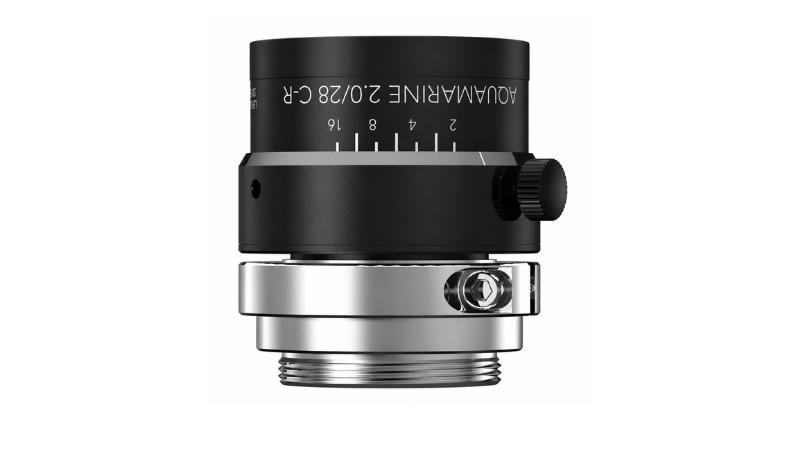
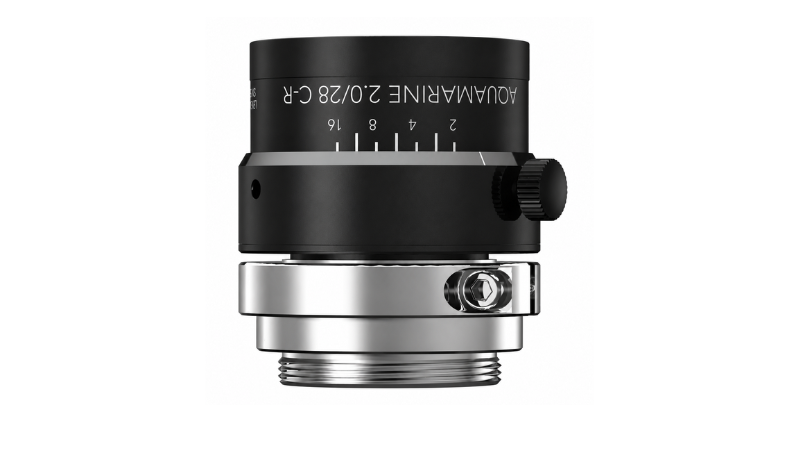
They cover sensors up to Type 1.1", or an image circle under 25.4 mm. Machine vision versions often have glass optics, metal barrels, and IP-rated, vibration-resistant, wide-temperature housings. They cost more than S-mount lenses but are built for demanding, long-life deployments.
Typical uses: machine vision, computer vision, and inspection systems.
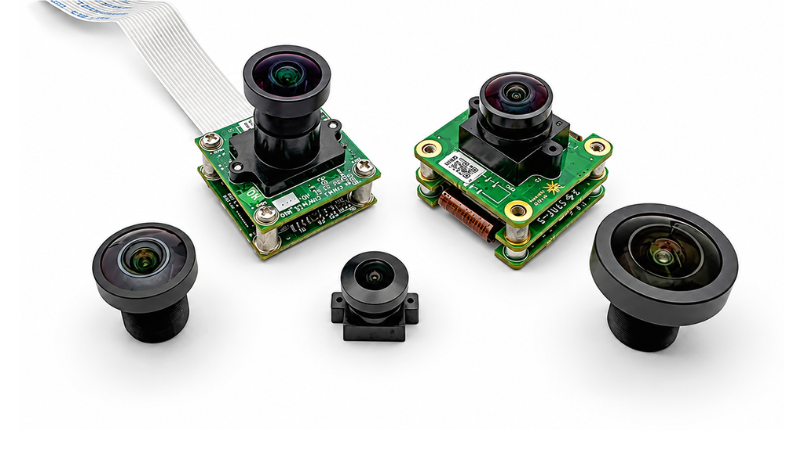
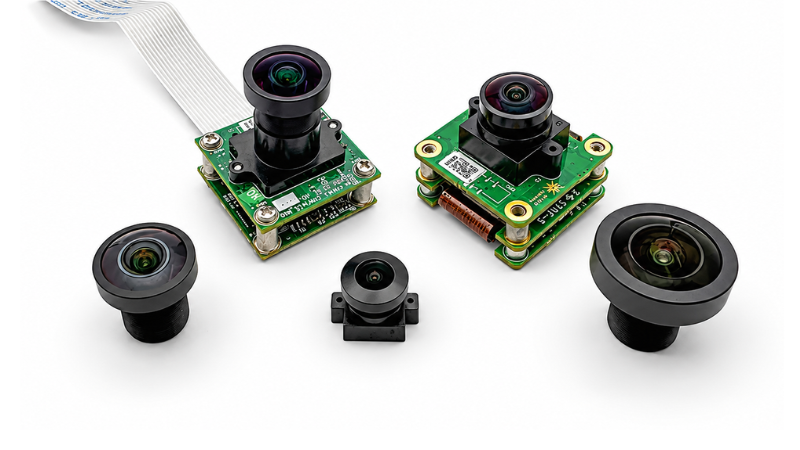 M12 S-mount lenses and board cameras
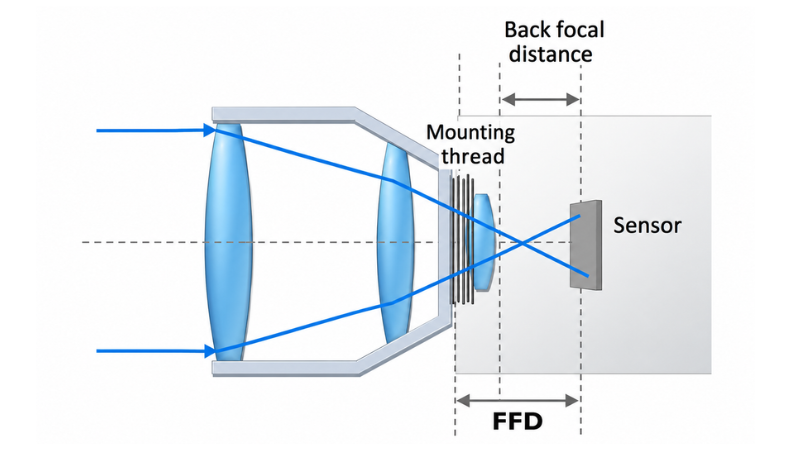
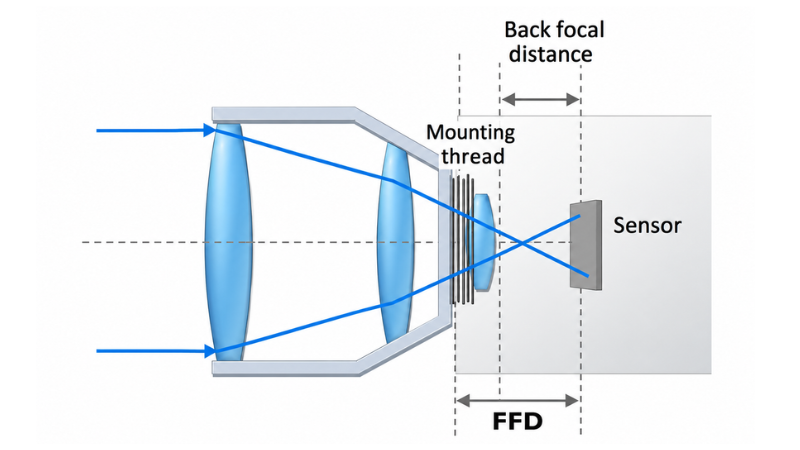 Flange focal distance (FFD): lens mount flange to sensor plane
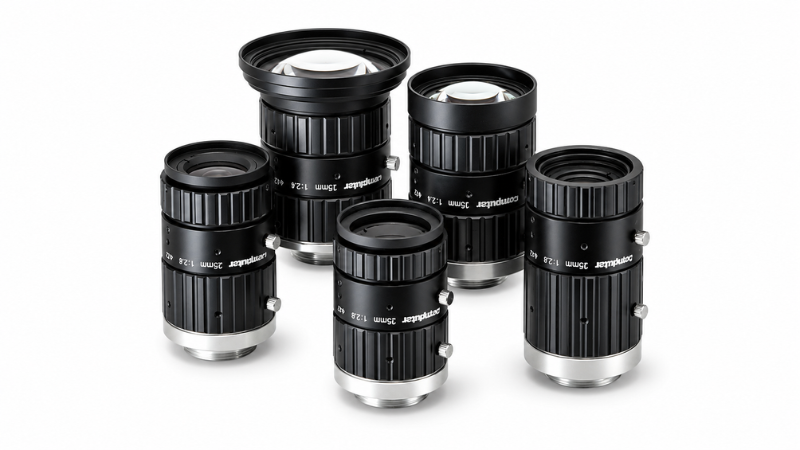
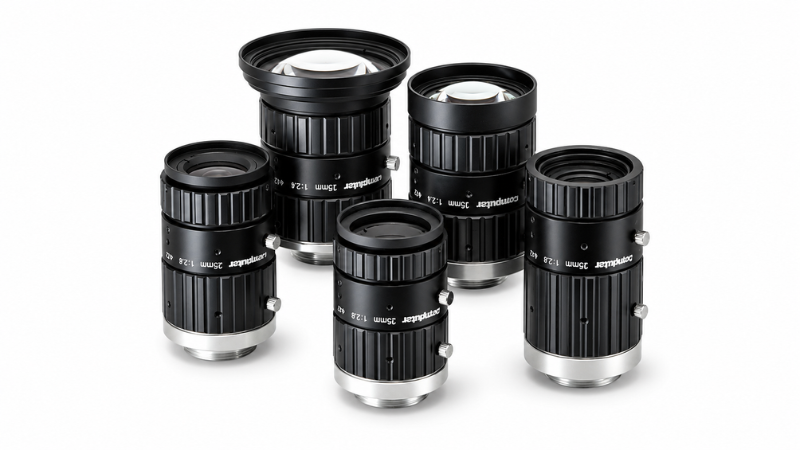 C-mount machine vision lenses
Lens features that solve specific problems
Once the mount is chosen, the application decides which features you need:
- Varifocal and motorized: Adjustable focal length changes field of view and magnification. Motorized versions can also drive zoom, iris, and autofocus remotely.
- DC iris or P-iris: The aperture adjusts automatically to changing light. P-iris talks to the camera for more precise control.
- IR-corrected: Stays in focus across visible and near-infrared light, ideal for day/night cameras. Daytime color may suffer slightly.
- Telecentric: Keeps magnification constant and removes parallax, essential for precise measurement in machine vision.
- Ultra-wide and fisheye: Field of view beyond 120°. Compact designs add distortion, though some premium designs keep it very low.
- Telephoto: Narrow view with shallow depth of field, isolating a subject from its background.
Quick selection guide
If you are building… | Start with | Consider adding |
|---|---|---|
Video doorbell or smart home camera | M12 S-mount, fixed focus | Wide-angle, IR-corrected |
| Wearable or very small camera | M6–M10 S-mount | Low-distortion wide-angle |
| Surveillance / CCTV camera | S-mount or CS-mount | Varifocal, DC/P-iris, IR-corrected |
| Automotive or in-cabin camera | M12 S-mount | Ultra-wide, IR-corrected |
| Factory inspection camera | C-mount, ruggedized | Fixed focus, high resolution |
| Precision measurement system | C-mount | Telecentric |
| Large-area monitoring (Smart City) | C/CS-mount | Motorized zoom, P-iris |
How Macnica Americas helps
As an engineering partner for Sony and Canon image sensors, we look at the sensor and the lens together, not as separate purchases. Our imaging specialists help customers match image circle, mount, focal length, and features to the sensor and the application. We work with leading lens makers in the industry to find the right fit for your applications.
The result is a better Capture stage, and cleaner data for every Process and Communicate step that follows.
Planning a new camera design? Contact Macnica Americas to talk with an imaging specialist about the right sensor and lens combination for your application.