



Canon LI8030SA Image Sensor

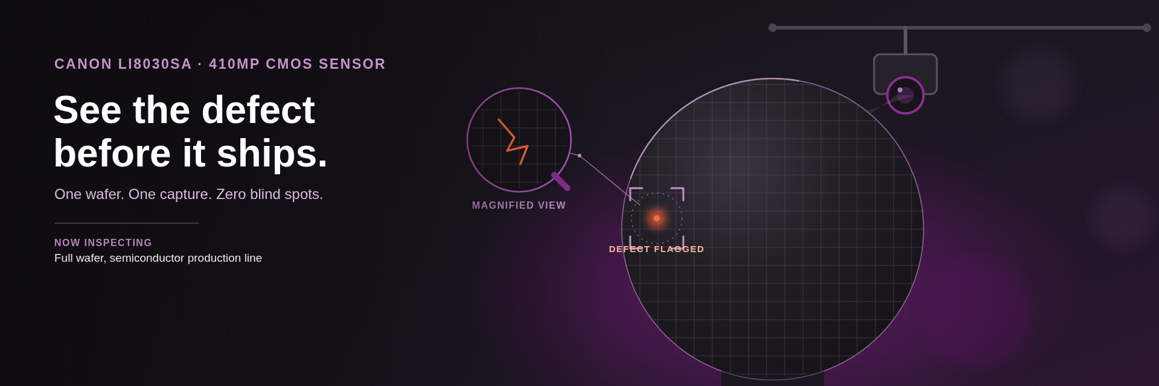
The defect that stops your line is smaller than most cameras can resolve
Canon's LI8030SA puts 410 million pixels behind the lens, giving automated and robotic inspection systems the resolution to catch what conventional vision hardware misses, from a full wafer down to a single micro bump.
Sensor status: In development at Canon. Macnica is scoping early samples and design in timelines now. Contact us to get on the list.
The Inspection Gap
As packaging goes 3D, the defects that matter go microscopic
Advanced GPU and AI chips now stack dies with HBM, larger logic, and dense interposers. Every TSV, RDL trace, and micro bump adds another point of possible failure, and one bad connection can take the whole package down. Panel and chip unit costs are high enough that zero failure is the only acceptable target, which means inspection has to cover every connection, not a sample of them.
Most vision systems trade resolution for speed, or speed for field of view. On a full wafer or a large format package, that tradeoff is exactly where defects hide.
The Sensor
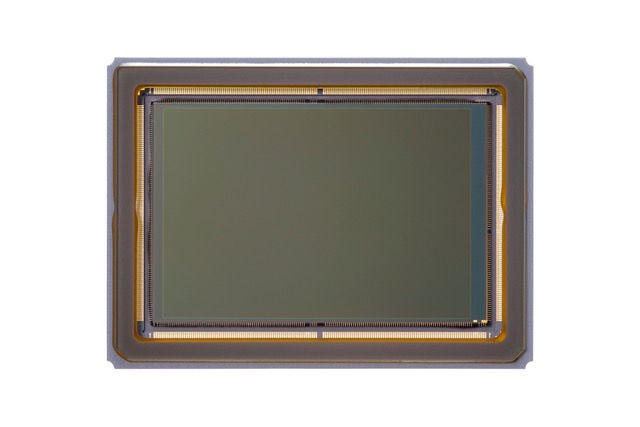
One capture, an entire panel, in focus
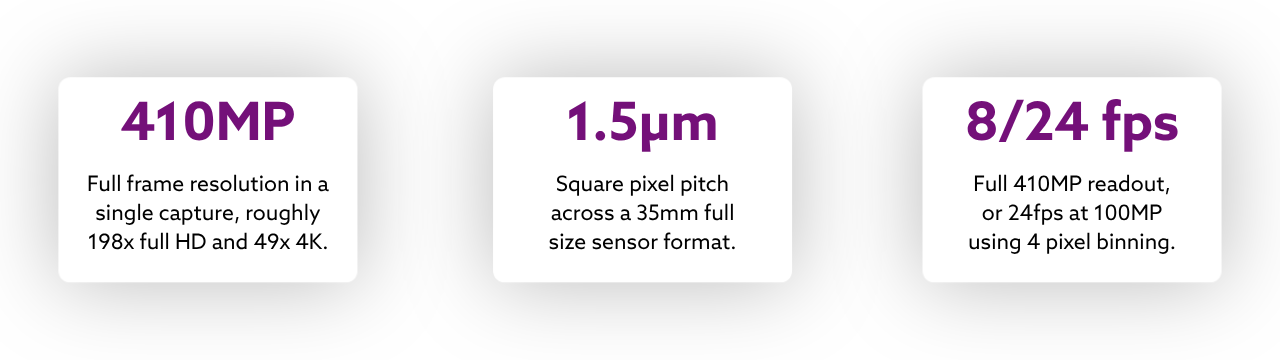
LI8030SA is a back illuminated, stacked CMOS sensor with a redesigned readout architecture, built specifically for applications where resolution and field of view can no longer be a tradeoff. The monochrome variant adds 4 pixel binning, so the same sensor can drop to 100MP at 24fps when throughput matters more than maximum detail.
| Format | Full size, 44.6mm diagonal, square 1.5µm pixels |
| Variants | LI8030SAC (color) and LI8030SAM (monochrome) |
| Readout | 3,280 megapixels per second, back illuminated stacked design |
| Interface | 16 lane SLVS output, 3.84 Gbps at 14 bit |
Where 410MP Earns Its Keep
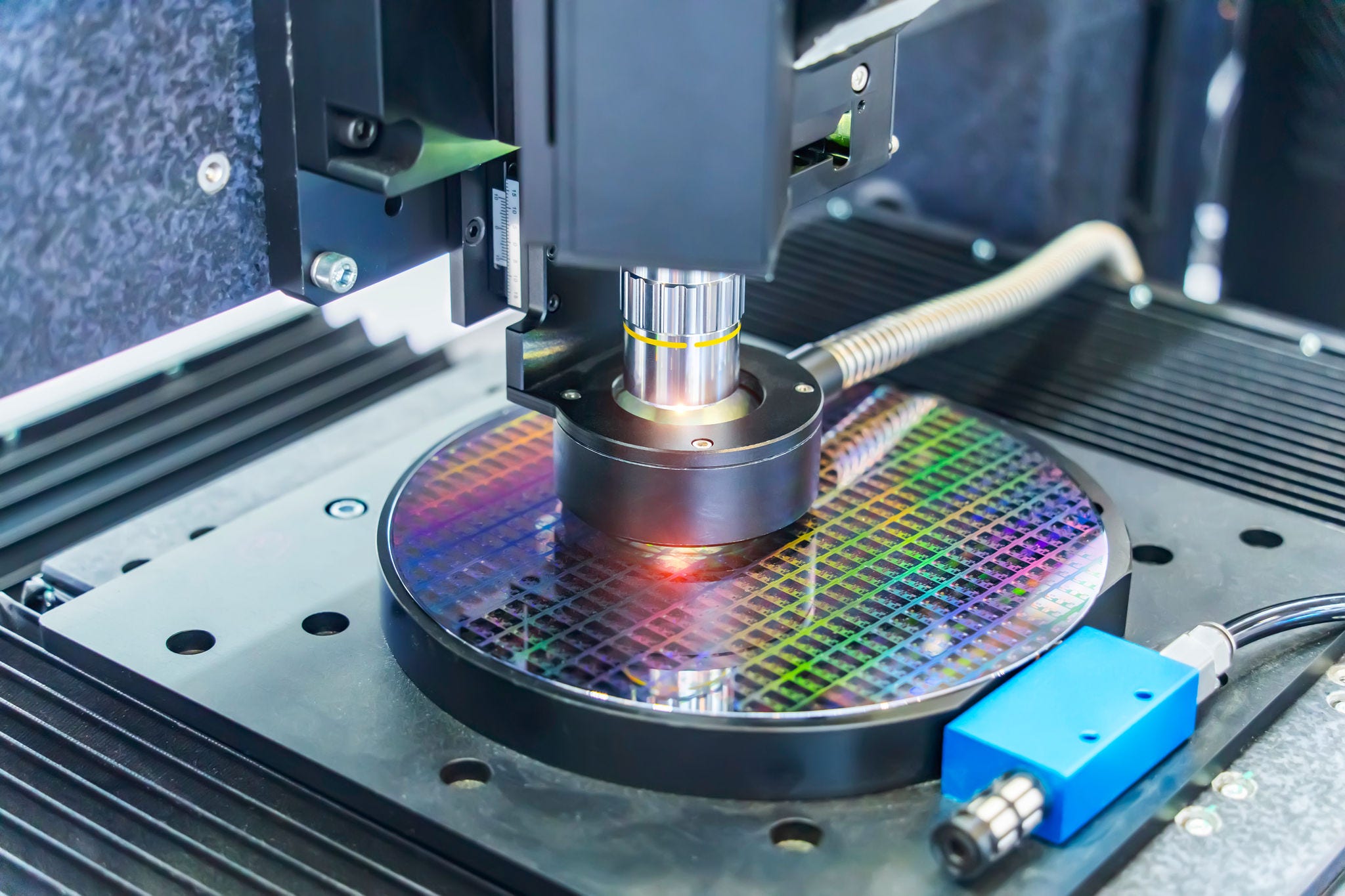
Built for the inspection tasks a standard sensor has to walk away from
From Canon's own target market analysis, LI8030SA is being validated across six application areas where full field resolution and micron level detail decide whether an inspection system catches the defect or misses it.
Semiconductor
Wafer & chip production inspection
Resolve defects across an entire wafer in one capture, instead of stitching together dozens of narrower field images.
Advanced Packaging
2.5D / 3D package inspection
Check TSV, RDL, and micro bump structures down to roughly 25 to 30 micron features, where a single bad connection fails the whole package.
Space & Astronomy
Astronomical observation
Wide field of view paired with high resolution, so faint or distant objects stay resolvable across the full frame.
Medical & Life Science
Microbial and bacterial detection
Cell level detail for bio and medical testing workflows that depend on resolving structures far below the millimeter scale.
Surveillance
Wide area monitoring & license plate recognition
Cover more ground per camera, with resolution to spare for identification tasks like plate recognition at range.
Multi Object Inspection
Simultaneous, full panel inspection
Inspect many parts, dies, or components in a single frame instead of indexing a camera across each one individually.
Complete The System

Sensor resolution only matters if the lens can deliver it
Macnica has already qualified multiple telecentric and high-resolution lens options for LI8030SA, so you're choosing from proven optical paths instead of starting a lens search from zero. The right option depends on your working distance, feature size, and field of view, and that's exactly the conversation our applications team has with you before any hardware is spec’ed.
| 1x–5x | 60–400mm+ | 4 Lens Options |
| Telecentric magnification range across our qualified lens options. | Working distance coverage, from tight inline stations to long standoff configurations. | Four Independent lens options already validated for LI8030SA, with more added as new applications come in. |
Specific lens models and part numbers are shared during application review. Tell us your working distance and feature size, and we'll match you to a validated option.
Full Specifications
Technical specifications
Straight from Canon's LI8030SA datasheet, for both the color and monochrome variants.
| Sensor size | Full size, 44.6mm diagonal |
| Effective pixels | 24,592 × 16,704 |
| Pixel size | 1.5 × 1.5 µm |
| Scan type | Progressive, rolling shutter |
| Max frame rate | 8fps (all pixels), 24fps (100MP bin) |
| Sensitivity (color) | 7,000 e/lx/sec, green |
| Sensitivity (mono) | 2,300 e/lx/sec |
| Saturation | 3,900 e (typ.) |
| Dark random noise | 4.0 e-rms (typ.) at 6dB gain |
| Output | 16 lane SLVS, 3.84 Gbps at 14 bit |
| Power consumption | 4.8W (typ.) at 8fps full readout |
| Power supply | 3.5V, 3.3V, 1.8V, 1.2V, -1.3V |
| Package | Ceramic LCC 170 pin + LGA 316 pin |
| Package size | 51.24 × 37.42 × 3.72mm |
Specifications per Canon's published LI8030SA datasheet and subject to change without notice. LI8030SA is currently in development. Contact Macnica for the latest availability.
Why Macnica
Getting the sensor is the easy part. Getting it into your system is the work.
Macnica pairs Canon's sensor roadmap with the lens selection, camera design, and application engineering it takes to turn 410 megapixels into a working inspection line.
Capture
Sensor and lens matched to your target
We help you pair LI8030SA with the right telecentric or high-resolution lens for your working distance and feature size, before you commit to a design.
Process
Data your line can actually use
At 3,280 megapixels per second, raw throughput becomes a system design problem. Our applications team works through interface, compute, and binning tradeoffs with you.
Communicate
From evaluation to design in
From first samples through qualification, Macnica stays engaged as your design and production partner, not a one-time order.
Next Step
Bring 410 megapixels of resolution to your next inspection design.
LI8030SA is in development now and Engineering Samples are available from Macnica. Additionally, complete evaluation systems are also available and ready to ship.
Whichever way you want to move forward, Macnica's applications team is ready.
Design Review
Talk to an applications engineer
Walk through your resolution, field of view, and throughput requirements with our team before you spec a system. Schedule a call
Documentation
Request the full datasheet
Get the complete LI8030SA specification sheet, package drawings, and lens compatibility notes. Request Datasheet
Early Access
Ask about engineering samples
LI8030SA is in development at Canon. Get on the list for samples and be first to know when timelines firm up. Get on the list
Similar Products
Macnica Americas Site Map


©Copyright 2026 Macnica Americas, Inc.