



MEP100 for Live ST 2110 Production
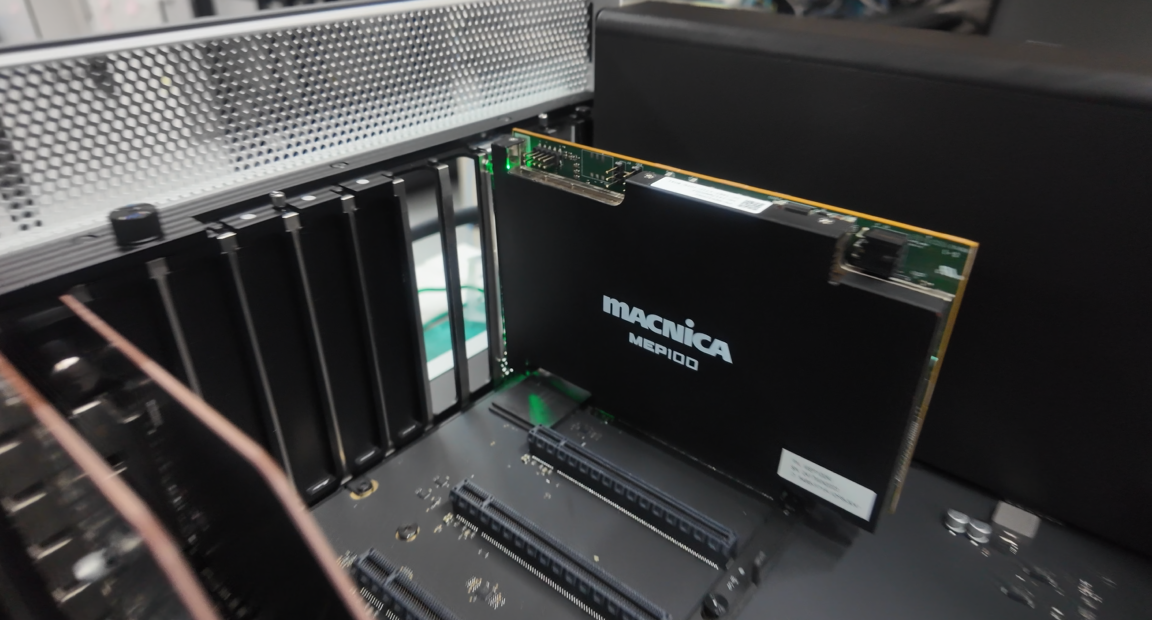
The first live MLB game in Apple Immersive ran on ST 2110. The MEP100 carried it.
On August 28, 2026, Apple and MLB put Apple Vision Pro viewers inside Red Sox vs. Yankees, live, in 8K 3D video with a 180-degree view. Behind that broadcast, the MEP100 SmartNIC moved the live signal from the production truck to the servers powering the stream.
From the stands to the headset
Beginning August 28 with Red Sox at Yankees, Apple and MLB produced select Friday Night Baseball games specifically for Apple Vision Pro, with their own broadcast rather than a repurposed telecast. Fans watched in Apple Immersive: 3D video captured in 8K with a 180-degree field of view, from camera angles that put them close to each at-bat, the celebrations in the dugout and the plays at the outfield wall. A dedicated commentary team called the game, with its own replays and with lineups and stats floating in the viewer's space, and ambisonic microphones carried the ballpark in Spatial Audio, so even between innings the viewer never left the stadium. Full games and highlights are available on demand in the Apple TV app on Vision Pro.
Why live immersive is a different kind of production
For years, baseball in a headset meant animated players rebuilt from tracking data. Streaming the real game, live, at the fidelity the eye expects, was the missing piece, and the hard part was always moving the signal. In Apple's own description of the workflow at WWDC26, immersive video runs at 32 times the resolution of a typical 2D broadcast, with spatial audio mixes of 64 or more channels. Most of the tools and transport in a broadcast facility were never built for media at that scale.
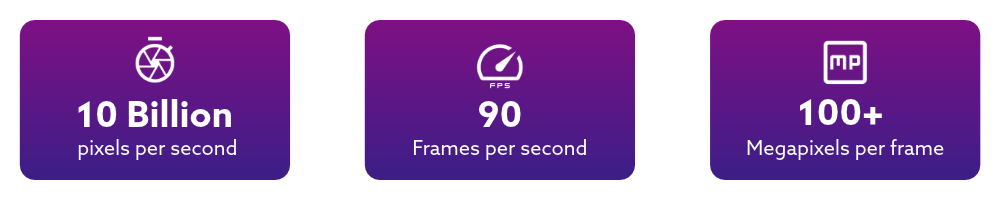
Apple captures and streams Apple Immersive Video at 90 frames per second with more than 100 megapixels per frame, over ten billion pixels every second, with lens calibration metadata that keeps real-world stereoscopic scale accurate in the headset. In ProRes that is a stream on the order of 85 Gb/s, which makes 100GbE the working minimum for the interface and rules out the I/O most facilities have on the shelf.
Where the MEP100 fits
Apple built the format on standards the industry already runs: ProRes video over ST 2110-22, audio over ST 2110-30 and per-frame scene metadata, such as lens calibration, over ST 2110-41, all synchronized with PTP. Both eyes travel as two essences inside a single ST 2110-22 stream, with no frame packing and no separate per-eye feeds to manage. Macnica built the first implementation of ProRes over ST 2110-22. It runs on the MEP100, which presents finished frames, audio and metadata to the application on a Mac Studio and returns them to the network as conformant ST 2110, with packetization, timing and ST 2022-7 redundancy handled in the card's Altera Agilex-7 FPGA.
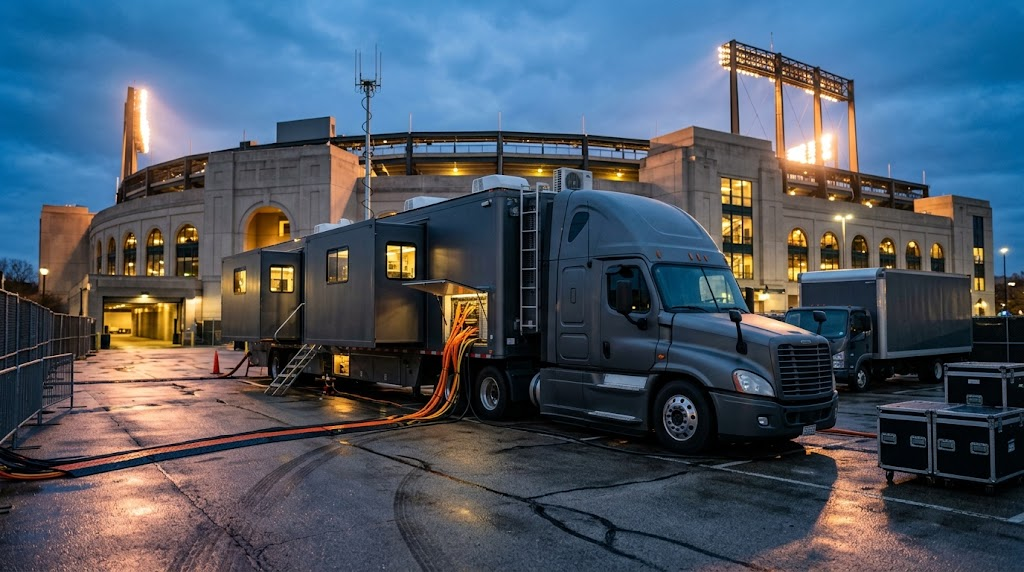
In the August 28 broadcast, the MEP100 was the transport layer that moved live immersive video from the production truck to the servers powering the stream. Macnica's role was the signal path; the viewing experience is Apple's.
Apple named Macnica in its immersive media ecosystem at WWDC26. The August 28 broadcast is the first time that pipeline ran in a live MLB production.
Links:
- Blog: Immersive Media Workflows: Synchronizing Video and Metadata with ST 2110 Standards. The earlier piece on keeping video and metadata frame-aligned.
- Press release: Apple ProRes with ST 2110-22 on the MEP100 at IBC2025. Where ProRes over ST 2110-22 was first shown.
- MEP100 SmartNIC. The product page: 100GbE, PCIe Gen4, ST 2110 in hardware, macOS and Linux.
- Apple Newsroom: Apple, MLB announce September "Friday Night Baseball" schedule. Apple's announcement of Friday Night Baseball live in Apple Immersive, starting August 28.
- WWDC26: Build live production tools for Apple Immersive Video. Apple's session describing the ST 2110 architecture.
Is your team working with ST 2110 in 2D or live immersive production?
The MEP100 carries ST 2110-20, -22, -30, -40 and -41 on two 100GbE ports, on macOS and Linux. Talk to Macnica about a configuration or an evaluation.
Similar Products
Macnica Americas Site Map


©Copyright 2026 Macnica Americas, Inc.