



SpaceBridge Semiconductor - Innovation Planned 25 Years Too Soon!
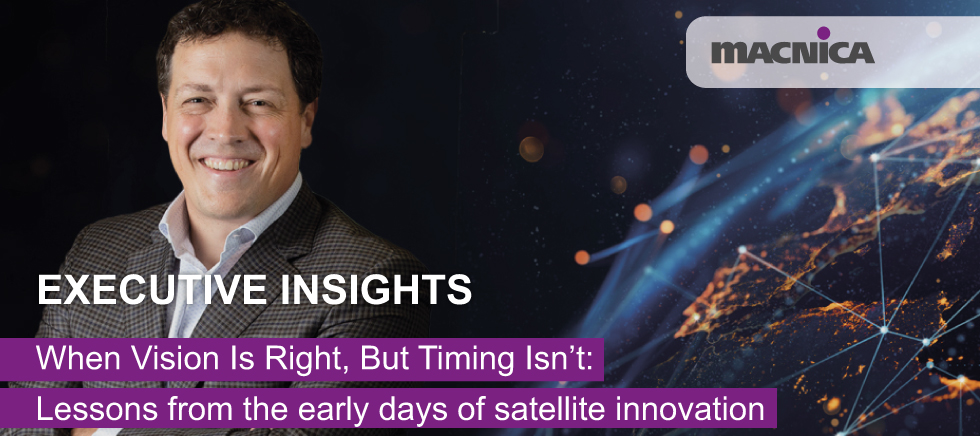
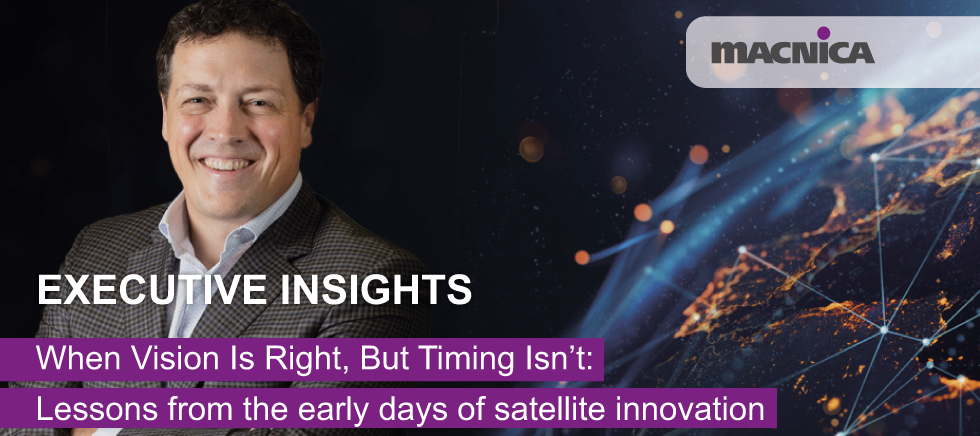
By Sebastien Dignard, CEO, Atlantic Region at Macnica
One of the most defining chapters of my career, and arguably the one that set me on the trajectory I’m on today, was my time at SpaceBridge Semiconductor.
I was just out of school, stepping into an Ottawa, Canada that was buzzing with the energy of the DotCom boom. It was a moment where technology, capital, and ambition collided.
SpaceBridge Semiconductor was a fabless semiconductor startup focused on communications chips, founded in the late 1990s, when optical networking and broadband silicon were attracting significant investment. Their products were originally geared for satellite networks.
The company was building something bold. Backed by multiple rounds of financing from industry leaders like Newbridge, ComDev, Alcatel, SGF/La Caisse, and Wesley Clover, we rapidly assembled a world-class engineering team. It felt like we were at the center of something big, because we were.
I was in my early 20s, one of the youngest members of a lean team of business development and sales and marketing professionals. I did everything, from supporting investor pitch decks, to managing key opportunities, and, yes, brewing coffee - but more importantly, I was learning. Absorbing. Watching how the great people who were funding and leading SpaceBridge thought, decided, built and executed.
Looking back, I’m convinced I compressed a lifetime of business experience into five years. That environment - surrounded by people who coached me, challenged me, and trusted me - shaped how I think about leadership, risk and opportunity.
So naturally, people ask: “Seb, what happened to SpaceBridge Semiconductor?”
Why didn’t they create the same wave of millionaires as others during the DotCom era? Why didn’t we all end up owning islands? Especially now that Starlink (under SpaceX) will be part of the largest IPO in human history!
Bad Timing
When the telecom bubble burst around 2000–2002, many semiconductor startups tied to networking infrastructure were hit hard as carrier spending collapsed. SpaceBridge Semiconductor was among those affected.
Some former colleagues are quick to answer, point fingers and cast judgment on others. However, for me, it's one of the most important lessons I’ve ever learned.
SpaceBridge Semiconductor didn’t fail because of a lack of talent, vision or execution. Instead, it was all about timing, and we were way too early.
The technology was real. The ambition was right. The total ecosystem wasn’t ready.
Markets, infrastructure and adoption curves weren’t aligned - and in business, that alignment is everything.
Timing is often the difference between being dubbed a visionary and being overlooked, and sometimes, the only difference between those two outcomes is the time it takes for ecosystems and supporting technologies to catch up.
Companies like SpaceBridge Semiconductor were not wrong to pursue their ambitions. They were solving one of the most important challenges in modern infrastructure: global, reliable connectivity or what we called the “last mile” in 1999. Yet, despite strong engineering and a clear value proposition, they never reached the scale we are now witnessing with companies like Starlink and AST SpaceMobile.
Why is the vision that didn’t work then, finally working now?
Technology Wasn’t Ready. Now It Is!
At SpaceBridge, we were working against constraints that were massive by today’s standards. Launch costs were high. Satellite capacity was limited. Ground infrastructure was expensive and complex. Networks were largely hardware-defined and static.
We believed the vision, but too much of the ecosystem still had to catch up. Today, many of those barriers have been dismantled.
Launch economics have been radically altered. Software-defined networking has replaced rigid architectures. AI can dynamically optimize bandwidth and routing. Terminals have become smaller, more practical and dramatically less expensive.
What once felt ambitious now feels achievable at scale. That doesn’t make the earlier vision wrong. It simply means the enabling technologies have finally arrived.
Business Models Caught Up, Too
Another lesson I’ve come to appreciate is that great technology alone rarely wins markets.
At the time, many companies in this space, including ours, were essentially infrastructure providers. We sold components, systems and capabilities into long enterprise or government sales cycles. The economics were capital-intensive and often removed from the end user.
That model created limits. Today’s leaders have changed the model entirely.
Today’s leading companies are not just selling infrastructure. They are building platform-as-a-service (PaaS) models that generate recurring subscription revenue. Their solutions vertically integrate across satellites, launch, terminals and services. They control a larger share of the stack and, in many cases, have a direct relationship with customers.
This shift fundamentally changes the economics, transforming satellite communications from a project-based business into a scalable digital platform - and a business model shift like this is just as important as the technology breakthrough itself.
The World Finally Has a Reason to Care
This may be the biggest difference of all. Twenty-five years ago, global always-on connectivity felt important, but not foundational.
There was no cloud-first enterprise. No streaming economy. No AI workloads demanding distributed compute. No expectation that every device, vehicle, factory or remote site should be connected all the time.
The urgency wasn’t there. Today, it is the equivalent of the “iPhone moment,” with the convergence of smartphones, cloud computing, always-on applications, and AI-driven devices.
Connectivity is no longer optional. It’s now foundational. Satellites have become an essential layer of global infrastructure, and once a capability moves from “valuable” to “essential,” adoption accelerates in ways early innovators could only imagine.
In some ways, the market finally caught up to our original idea.
Ecosystems Win, Not Individual Technologies
My experience at SpaceBridge taught me that breakthrough technologies rarely scale on their own. Instead, they scale when ecosystems form around them. Early innovators back then operated in fragmented ecosystems with limited integration across technologies. Back then, too many dependencies were immature at the same time.
Today, satellite connectivity sits at the center of a highly aligned stack of cloud platforms, edge AI, 5G and autonomous and distributed systems.
Today, those pieces are increasingly aligned. And that convergence is what creates markets.
That is also how we are shaping the future at Macnica in the Americas and in Europe. We know, our individual suppliers are extremely valuable and important, however, what will tilt the scales for all of us is our ability to execute on the total ecosystem approach. For that reason, Macnica has built a total ecosystem that ties in a fundamental Semiconductor Suppliers, innovative system level technology and solutions providers as well as our own library of IP and enabling technology.
At Macnica we know innovation is rarely about one invention or technology. It’s about timing across an entire ecosystem and our ability to quickly enable our customers for success in their respective markets and verticals.
Capital Finally Found Patience
There is one more difference people sometimes overlook, especially when it comes to funding... and that is conviction.
In the early days, many of these ventures were treated as speculative bets. Capital was cautious and limited, and long ROI cycles were difficult to manage and justify.
Today, investors are funding these markets very differently, pouring billions of dollars into space infrastructure.
There is a greater willingness to support long-cycle infrastructure platforms because the strategic value is clearer. That patience matters more than ever because transformational markets often take longer to mature than quarterly thinking allows.
The Real Lesson
Looking back at SpaceBridge Semiconductor, nothing was wrong with the company’s vision. The world simply needed time. That may be the most important lesson I carried forward from that experience. Being early can look exactly like being wrong, but they are not the same thing.
Many early innovators do not struggle because their ideas lack merit. They struggle because the supporting conditions - technology maturity, ecosystem alignment, market demand or capital conviction - have not yet converged. In many cases, those early efforts become the foundation on which others later scale.
I think about that often in my work today at Macnica. We help customers understand that while some targeted technologies innovate and evolve, they have them time to understand what’s needed for a total, converged technology and business ecosystem.
That perspective was shaped, in no small part, by SpaceBridge. It taught me that innovation is not just about seeing what others do not. It is also about understanding when the world is ready and that timely technology ecosystems play a critical role in commercialization and ROI’s.
Some of tomorrow’s most important breakthroughs like Quantum Compute for example may already exist today; they may simply be a few ecosystem cycles early. If my time at SpaceBridge taught me anything, it is that timing does not diminish vision - it often determines when vision becomes impact, and as the founding fathers at Macnica say, the first step to “sowing the seeds of tomorrow.”
In the meantime, as I witness the potential record setting IPO of a company that is delivering technology we originally defined and partially delivered in 1999, I can’t help but dream and promise myself to use the lessons learned for Macnica and our ecosystem of partners and customers.
In your experience, what technologies failed because they were too early? Have you ever worked for a company with a similar experience to SpaceBridge?
Sebastien Dignard is CEO, Atlantic Region at Macnica, where he leads growth across North America, Europe and South America. He writes about leadership, emerging technologies, innovation and the business principles that help organizations adapt and grow.
Related Articles

Macnica Americas Site Map


©Copyright 2026 Macnica Americas, Inc.