



From Cloud to Physical AI: Why Real-Time Intelligence Is Moving to the Edge
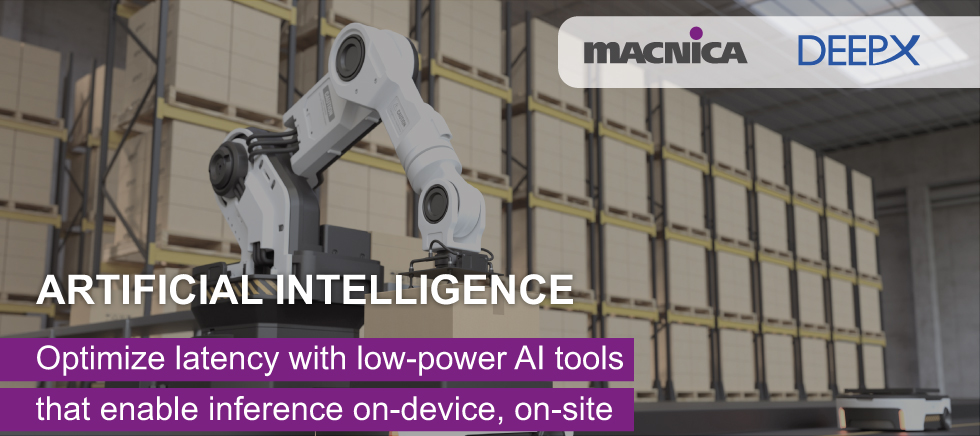
Artificial intelligence has transformed how organizations process information, automate workflows, and make decisions. Until recently, much of that intelligence lived primarily in the cloud or within large-scale data centers, but the next wave of AI is beginning to take shape in the physical world, embedded directly into robots, autonomous systems, industrial equipment, and smart environments.
This shift is driving the rise of Physical AI, where intelligent systems don't just analyze information: they perceive, reason, and act in real-world environments. To make this possible, AI must move closer to where decisions happen.
Why Traditional AI Models Face Challenges in Real-World Environments
Cloud computing has enabled many of today's AI applications, but physical systems operate under a different set of requirements.
Robotics systems and autonomous devices often need to:
- Process information instantly
- Operate with minimal latency
- Continue functioning even with limited connectivity
- Maintain low power consumption
- React continuously to changing environments
Sending every decision to the cloud can introduce delays that may be acceptable for data analysis, but are problematic for machines interacting with the physical world.
Imagine a robot navigating a factory floor, an autonomous delivery system avoiding obstacles, or an industrial inspection system identifying defects in real time. These applications require intelligence to exist directly within the system itself.
Physical AI Is Driving a New Edge Computing Model
Rather than relying exclusively on centralized processing, Physical AI distributes intelligence to the edge.
This enables devices and systems to make decisions where action occurs.
A recent collaboration between DEEPX and Hyundai Motor Group's Robotics LAB highlights how the industry is moving in this direction. The organizations announced plans to co-develop a next-generation Physical AI computing platform designed specifically for robotics applications. The initiative focuses on enabling large-scale AI models to run in real time within robotic systems while maintaining efficiency and low power requirements.
Their work includes collaboration across several key areas:
- Ultra-low-power AI semiconductor architecture
- Robotics AI computing hardware
- Physical AI software stacks
- Robotics application AI libraries
The broader goal is to create infrastructure capable of supporting intelligent robotic systems operating directly within real-world environments.
The Importance of Low-Power Intelligence
As AI capabilities continually advance, performance alone is no longer the only challenge. Power efficiency has become increasingly important.
Robots, autonomous mobile systems, and industrial devices often have physical constraints that make traditional high-power computing approaches difficult to scale. Systems that require large amounts of power can create challenges around heat, battery life, system size, and deployment flexibility.
This is where low-power AI processing becomes important.
By enabling high-performance inference directly on-device, edge AI systems can reduce reliance on cloud infrastructure while improving responsiveness and enabling more scalable deployment.
Instead of continuously sending data elsewhere for processing, systems can analyze and act locally.
Moving Beyond Data Centers
The AI industry appears to be entering a new phase, one where intelligence becomes integrated into machines that operate alongside people in the physical world.
From smart factories and industrial automation to mobility systems and robotics, organizations are increasingly exploring how AI can move from analysis to action.
The question is becoming less about whether AI can process information and more about where that intelligence should live.
For many applications, the answer may be closer than expected.
Looking Ahead
As Physical AI continues evolving, advances in low-power computing, robotics platforms, and on-device intelligence will likely play an increasingly important role in shaping next-generation systems.
At Macnica, we continue to explore technologies helping accelerate this shift across robotics, edge AI, machine vision, and intelligent systems.
Interested in learning more about DEEPX technologies and Physical AI applications?
Get more information at DEEPX: Physical AI Systems for Real-World Machines, or reach out to our team!
Related Articles



Macnica Americas Site Map


©Copyright 2026 Macnica Americas, Inc.