



Pressure is a Privilege
It takes a billion years for the Earth to form a natural diamond. Millions of years to transform limestone to marble. Months for human muscle to develop. But sometimes only a few moments to shape who we are.
The common force behind all of this is pressure.
Many of us perceive pressure as a negative - something to manage, reduce or escape. But pressure can also be a force for good. It can shape our beliefs, influence how we work with others and strengthen how we lead.
Pressure can refine judgment, humility, courage and resilience. Deadlines and constraints can sharpen thinking. Scarcity can drive creativity. Shared hardship can deepen trust and create stronger emotional bonds.
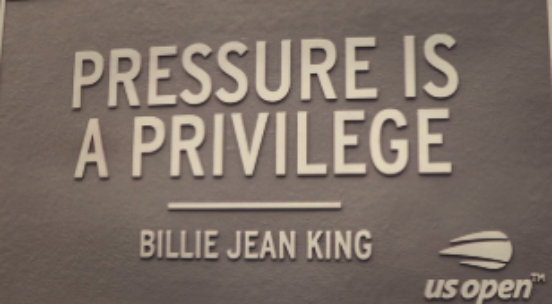
Tennis legend Billie Jean King coined the phrase, “Pressure is a Privilege,” signifying that feeling pressure, whether in sports, work, or life, means you have earned the opportunity to succeed in a high-stakes, competitive or demanding situation. It is a mindset that transforms anxiety into an opportunity for growth.
Pressure shows up when you’ve earned responsibility. When you’re trusted to deliver. And when you’re operating at a level where outcomes matter.
Pressure is not a burden; it’s proof that you are relevant. That you are growing. That you are in the game.
To be honest, there was a time when I experienced pressure very differently. It felt heavy. Relentless. At times, overwhelming. I couldn’t see the upside, and I certainly couldn’t see the finish line.
That perspective evolved as I grew older and advanced further into my career. Today, pressure fuels me. It’s what gets me out of bed with energy and intent. It’s what drives me and our team as we write the next chapter for Macnica in the West. Pressure is no longer something to survive. It’s something to embrace.
Applying Pressure Responsibly
Pressure can be constructive, but it can also be destructive if poorly applied. What might sculpt a strong character has the same potential to diminish spirits, burnout employees and foster mistakes.
As leaders, we don’t just experience pressure, we create and distribute it. That carries responsibility, and the recognition that people respond to pressure differently.
To manage pressure evenly and responsibly, managers should keep these seven principles in mind:
- Make clear that challenge often comes from trust in someone’s capability.
- Recognize the weight people may be carrying, not just the outcomes they deliver.
- Balance challenge with the right level of support, coaching and clarity.
- Create safe ways for people to say when the load has become too much.
- Make it acceptable to raise concerns and make mistakes without fear.
- Help teams separate what is critical from what is simply urgent.
- Watch for early overload signals. Don’t wait for burnout to intervene.
High expectations paired with high support create development. High expectations without support lead to burnout.
When pressure is misunderstood and mismanaged, it can break people. But when properly applied and supported, it can elevate them beyond what they thought possible. It can be their crowning moment; it can be the foundation for great business leaders and innovators.
That’s where trust matters most.
Sharing the Pressure and the Commitment for Success
Pressure exists on both sides of leadership, though it may be interpreted differently. If there is no trust between those assigning work and those carrying it out, pressure turns into doubt, hesitation and ultimately failure.
But when trust is strong, pressure becomes a shared commitment to success. A signal that we believe in each other and the end objectives.
In technology, as in leadership, breakthroughs often emerge under pressure. Constraints force people to think differently, solve creatively and challenge assumptions. For example, look at the Ukrainian drone industry. The pressure of the conflict has vaulted Ukrainian companies and individuals to be the best drone innovators and manufacturers in the world.
Our company’s TEAMS values are not just words. They reflect how we operate. The “T” in TEAMS stands for trust. Trust that is built through transparency and communication, reinforced through support, and proven through action.
As a leader, it’s never easy to see your team under pressure. But it’s also where the most meaningful moments happen.
Because there is nothing more powerful or rewarding for a leader than watching someone rise, thrive and celebrate
To watch them push through adversity to grow, deliver and succeed.
That’s what pressure, at its best, creates.
And that’s why, even for leaders who manage it… pressure is a privilege.
Sebastien Dignard is CEO, Atlantic Region at Macnica, where he leads growth across North America, Europe and South America. He writes about leadership, emerging technologies, innovation and the business principles that help organizations adapt and grow.
Macnica Americas Site Map


©Copyright 2026 Macnica Americas, Inc.